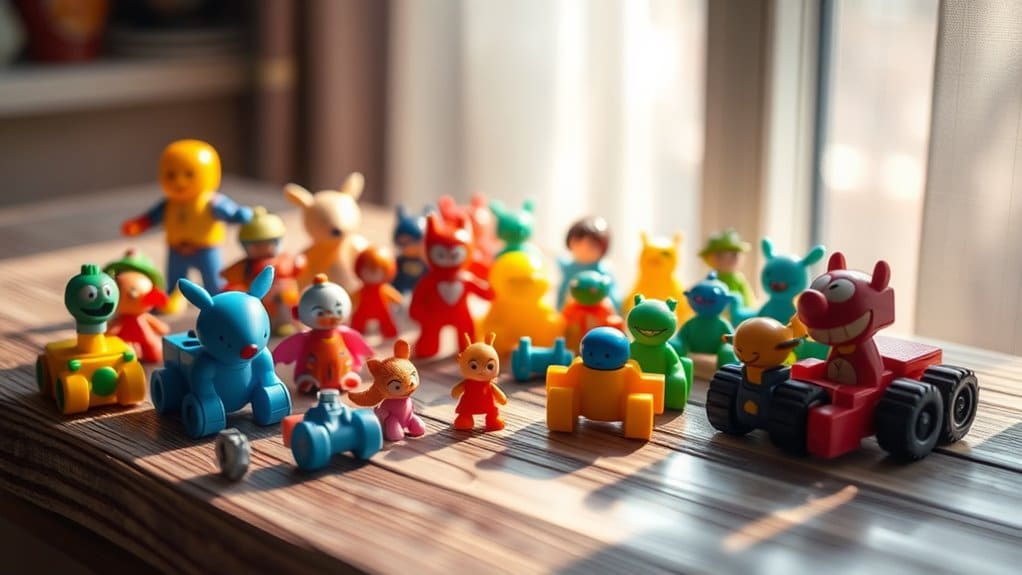
For enchanting toy photography, explore natural light's nuances and embrace golden hours for warmth. Use LED lights for consistent results and experiment with colored gels to add mood. Diffusers and reflectors help balance shadows and enhance details. Play with shadows and backlighting for dramatic effects and unique silhouettes. Master the art of positioning and balancing multiple light sources. These essentials set the stage for extraordinary scenes, and there's more to uncover for creating your visual masterpiece.
Understanding Natural Light and Its Effects
While exploring toy photography, understanding natural light is essential to enhancing your images. Begin by observing how sunlight changes throughout the day. Notice the soft, warm glow during golden hours—shortly after sunrise and before sunset. This light can add depth and warmth to your toy scenes. Midday sun, however, often creates harsh shadows. To soften these, try positioning your toys in open shade or using a simple diffuser, like a white sheet, to scatter the light.
Pay attention to window light indoors. North-facing windows provide consistent, soft lighting, ideal for detailed close-ups. Experiment with angles and distances to see how light interacts with your toys. Reflectors, such as white poster boards, can bounce light back onto your subject, enhancing details without overpowering shadows.
Mastering the Use of Artificial Light Sources
Even though natural light is valuable, mastering artificial light sources opens up a world of creative possibilities in toy photography. You can shoot anytime, control shadows, and experiment with various effects. Here are three key artificial lighting tips:
- Invest in LED lights: They're energy-efficient and provide consistent lighting. You can adjust brightness levels to suit your scene.
- Use colored gels: These translucent sheets can change the color of your light, adding mood and atmosphere to your shots. Experiment with different colors for dynamic results.
- Try light positioning: Move lights around to create interesting shadows and highlights. Side lighting can add depth, while backlighting creates silhouettes.
Exploring the Benefits of Diffusers and Reflectors
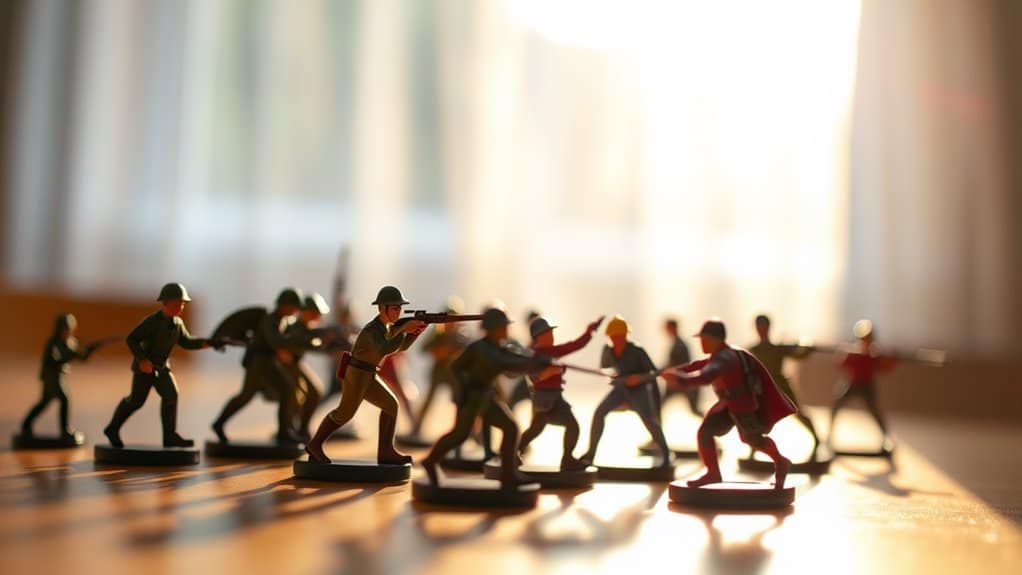
As you explore deeper into toy photography, incorporating diffusers and reflectors can greatly enhance your images. Diffusers soften harsh light, reducing shadows and creating a more balanced look. They help maintain even lighting, preventing glaring highlights on your toys. By diffusing light, you'll achieve a more natural appearance, highlighting the details and colors of your subjects.
Reflectors, on the other hand, redirect light to fill in shadows and add depth. They're perfect for brightening areas without introducing additional light sources. Reflectors can be as simple as a white piece of paper or a professional silver reflector. Both tools are essential for controlling light and achieving a polished look. Experiment with positioning to see how they affect your toy's appearance, enhancing your creative vision.
Creating Dramatic Effects With Shadows
For toy photographers seeking to add a touch of drama to their images, manipulating shadows is a powerful technique. Shadows can highlight details, create depth, and evoke emotion. To effectively use shadows, consider these tips:
- Change the Light Source Angle: Adjusting the light source's angle can elongate shadows, adding intrigue and emphasizing your toy's features. Experiment with side lighting for more pronounced effects.
- Play with Intensity: Use a dimmer or different light bulbs to control the light's intensity. A softer light creates subtle shadows, while a harsh light can make them bold and striking.
- Incorporate Natural Light: Natural light can be unpredictable, but it often produces the most dynamic shadows. Try shooting during the golden hour for softer, more dramatic shadows.
Experimenting With Colored Gels for Creative Impact
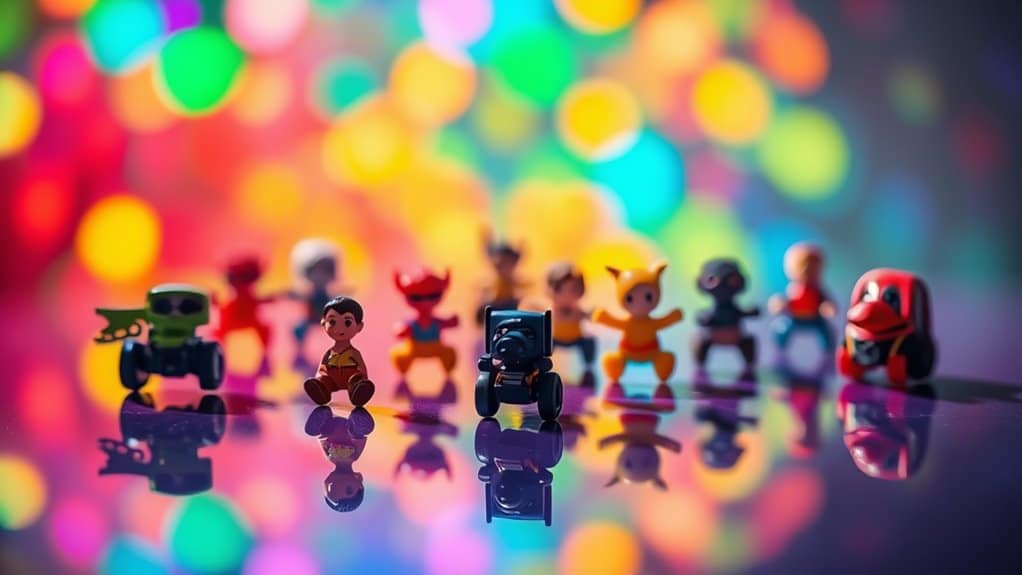
Why not add a splash of color to your toy photography with colored gels? These simple yet effective tools can transform your shots by adding drama and mood. You can easily attach gels to your light source, altering the color temperature and ambiance. Experiment with different hues to see how they affect the mood of your scene.
For instance, blue gels can create a cool, mysterious atmosphere, while red gels can evoke warmth or intensity. Don't hesitate to layer colors for a more complex look, or use contrasting colors to make specific elements pop. Playing with gels allows you to explore endless creative possibilities and develop your style. Remember, practice is key—test various combinations to discover what works best for your vision.
Utilizing Backlighting for Unique Highlights
Backlighting can transform your toy photography by crafting striking silhouettes and adding unique highlights. Position your light source behind the toy to create dramatic outlines and enhance details with a subtle glow. Experiment with angles and intensity to find the perfect balance that brings your toys to life in unexpected ways.
Creating Silhouettes With Backlighting
While many toy photographers focus on capturing vivid details, experimenting with backlighting can create stunning silhouettes that highlight your subject in a whole new way. Silhouettes add mystery and drama, transforming ordinary toys into enchanting figures. To achieve this effect, position a strong light source behind your toy, ensuring the light doesn't spill onto the front of your subject.
Here are three steps to master silhouette creation:
- Choose Your Background: Use a simple, contrasting background to emphasize the silhouette. A bright sky or a plain wall works best.
- Adjust Exposure: Lower the exposure settings on your camera to avoid overexposing the background. This keeps your subject dark and defined.
- Experiment with Angles: Move around your subject and light source to find the most striking silhouette composition.
Enhancing Details With Glow
When you want to add a magical glow to your toy photography, use backlighting to enhance the details and create unique highlights. Start by positioning a light source behind your toy, allowing the light to outline its shape. This technique not only highlights edges but also brings out intricate textures, making them pop. You'll notice how the glow adds depth and dimension, transforming a simple scene into a enchanting one.
Adjust the light's intensity and angle to find the perfect balance. Too much light can wash out details, while too little might not capture the desired effect. Experiment with different light sources like LED lights or natural sunlight for varied results. Remember, the key is subtlety; sometimes, a gentle glow can make all the difference.
Balancing Multiple Light Sources for Consistent Results
Creating enchanting toy photographs often requires skillful management of multiple light sources. Balancing these can be tricky, but it's essential for achieving consistent results. Start by understanding each light's role in your scene. Consider the interplay between:
- Key Light: This is your primary source. It defines the subject's shape and sets the tone.
- Fill Light: Use this to soften shadows. It prevents harsh contrasts and adds depth.
- Backlight: This highlights edges and separates the toy from the background, adding a 3D effect.
Position these lights carefully, adjusting intensity and angle to guarantee they complement rather than overpower each other. Experiment with distances and modifiers like diffusers to fine-tune the look. With practice, you'll master creating balanced, enthralling images.
Frequently Asked Questions
What Camera Settings Are Ideal for Toy Photography Lighting?
You've got to set your camera to manual mode. Adjust the ISO to 100-400, use a small aperture like f/8-f/16 for depth, and keep the shutter speed around 1/60 to 1/200 for sharp toy photos.
How Can I Make My Toys Look Larger in Photos?
To make your toys look larger, use a wide-angle lens and shoot from a low angle. Get closer to the toy and position it against a simple background. Adjust lighting to eliminate shadows and enhance size perception.
What Are the Best Times of Day for Outdoor Toy Photography?
When the sun paints the sky with its golden brush at dawn or dusk, you've got the magic hours for outdoor toy photography. Capture those enchanting moments when shadows dance delicately, and light softens to create stunning scenes.
How Do I Prevent Glare on Shiny Toy Surfaces?
To prevent glare on shiny toy surfaces, angle your light source to the side, use diffusers to soften the light, or try polarizing filters. Experiment with different setups until you find the best solution for your shot.
Can Smartphone Cameras Effectively Capture Toy Photography Lighting?
You can definitely use smartphone cameras for toy photography lighting. They offer good quality and versatility. Just make sure you adjust the exposure settings and use natural light or external sources to enhance your shots effectively.
At a Glance
You've now accessed the magical domain of toy photography lighting! With these tips, you're no longer just a photographer; you're a wizard, casting spells of light and shadow. You'll make toys come alive, creating cinematic masterpieces in every shot. The play of natural light, the dance of colored gels, and the drama of shadows will transform your photos into legendary works of art. So grab your camera and cast your own dazzling light spells!