To light diorama scenes in toy photography, start by understanding the fundamentals: direction, intensity, and color. Choose LED panels or softboxes for even, soft lighting, and mini spotlights for focus. Mimic sunlight with warm bulbs at an angle, and use reflectors for softening light. Enhance depth with strategic shadows and experiment with colors, like blues for mystery or oranges for warmth. Overcome challenges like glare and flatness with positioning and intensity adjustments. Discover the magic of mastering these techniques.
Understanding the Basics of Lighting
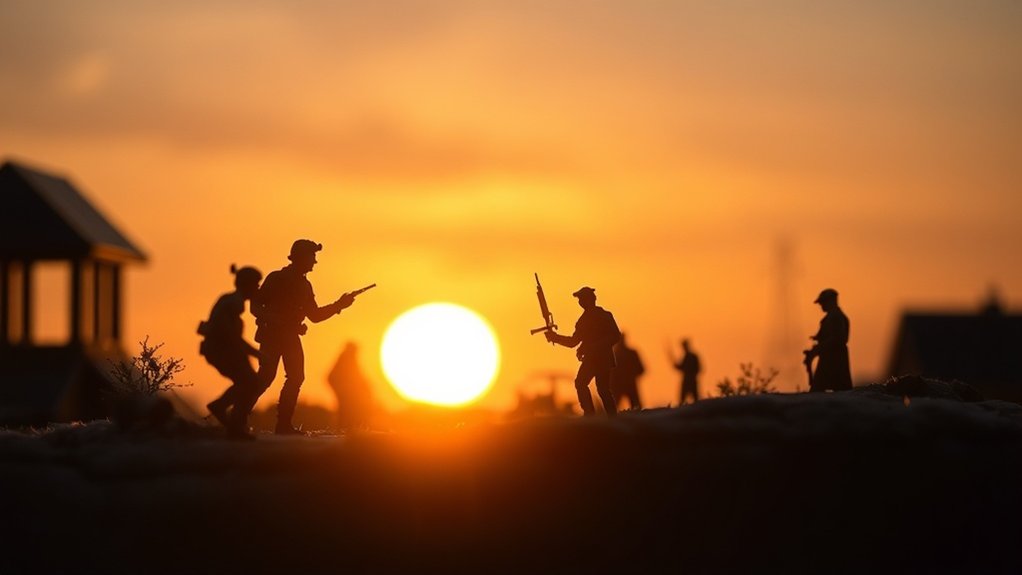
When lighting your diorama scenes, it’s crucial to grasp the basics of lighting to create the desired effect. Begin by understanding three key elements: direction, intensity, and color. Direction impacts the mood and depth; experiment by moving your light source around the scene. Intensity dictates how much light hits your diorama. Adjust it to highlight or shadow specific areas, enhancing the scene’s drama or realism.
Color can dramatically change the perception of your scene. Warmer tones might evoke nostalgia, while cooler hues can suggest mystery. Use gels or colored lights to achieve your desired palette. Always consider how these elements interact with your diorama’s materials and textures. This understanding forms the foundation for effectively capturing your toy photography vision.
Choosing the Right Lighting Equipment
To bring your diorama scenes to life, selecting the right lighting equipment is paramount. You need the right tools to highlight details, create mood, and enhance realism. Start by considering the size of your diorama and the mood you want to convey. Here’s what you might need:
- LED Panels: Adjustable brightness and color temperature for versatile lighting.
- Ring Lights: Even, soft light that reduces harsh shadows.
- Mini Spotlights: Focused beams to highlight specific areas.
- Softboxes: Diffused light to mimic natural ambiance.
- Light Stands: Adjustable height and angles for precise positioning.
Each piece of equipment serves a unique purpose, so choosing wisely can transform your toy photography from ordinary to extraordinary. Explore these options to find the right combination for your creative vision.
Creating Natural Sunlight Effects
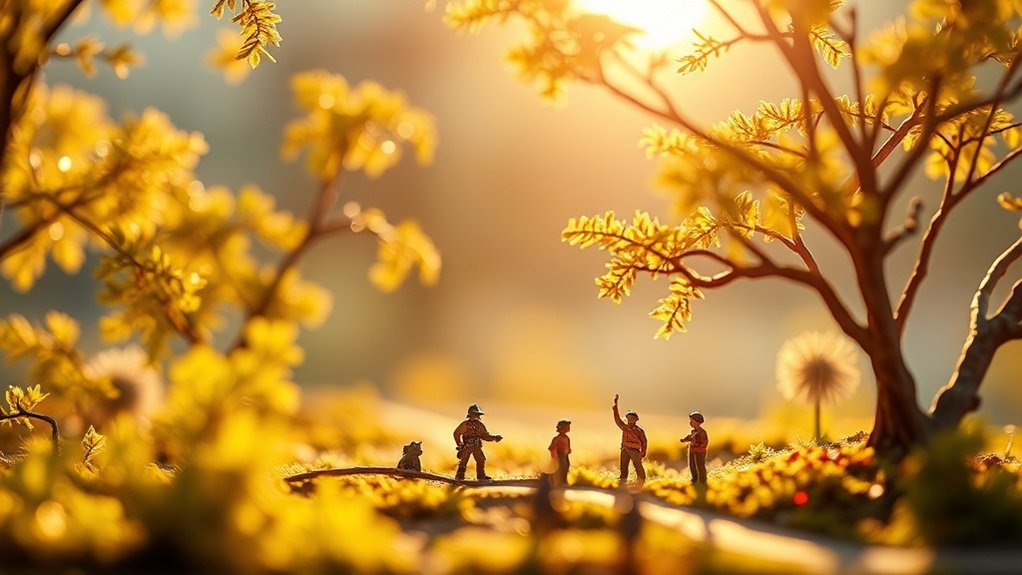
To create convincing natural sunlight effects in your diorama, start by simulating direct sunlight with a focused light source. Positioning this light at an angle will help you craft soft shadows that mimic a sunny day. Experiment with the intensity and distance to achieve a realistic sunlight feel.
Simulating Direct Sunlight
Ever wondered how to capture the essence of direct sunlight in your diorama scenes? You can achieve this with a few simple techniques. Start by positioning a strong light source, like a desk lamp, to mimic the sun’s angle and intensity. Use a warm bulb to replicate the golden hue of sunlight. Adjust the distance to control the light’s harshness and brightness. Consider using reflectors or white cards to bounce and soften the light where needed.
Imagine your scene with these elements:
- A desk lamp angled to cast sharp shadows.
- A warm bulb creating a golden glow.
- Reflectors bouncing light onto darker areas.
- White cards adding gentle fill light.
- Shadows stretching dramatically, emphasizing depth.
Experiment with these ideas to bring your diorama to life.
Crafting Soft Shadows
While mastering the art of diorama lighting, capturing the essence of natural sunlight often involves crafting soft shadows that add realism and depth. To achieve this, you’ll want to diffuse your light source. Use materials like white sheets, tissue paper, or a lightbox to scatter the light evenly over your scene. This creates gentle shifts from light to shadow, mimicking overcast days or the soft glow of morning light.
Position your light source at a low angle to replicate the sun’s position during golden hour. This generates elongated, soft-edged shadows that enhance the overall atmosphere. Experiment with different materials and distances to find the perfect balance. Remember, subtle adjustments can make a significant difference in conveying a natural sunlight effect.
Using Shadows to Enhance Depth
When you’re looking to enhance depth in your diorama, strategic shadow placement is key. By manipulating your light source, you can create contrasts that make elements pop and interact in dynamic ways. Don’t underestimate how shadows can transform a flat scene into a rich, layered experience.
Strategic Shadow Placement
To create a more dynamic and engaging diorama, employing strategic shadow placement can greatly enhance depth and realism. Shadows aren’t just dark spots; they’re storytelling tools. By thoughtfully placing shadows, you add layers and intrigue to your scenes. Position your light source to craft shadows that mimic real-world lighting. Think about the narrative your shadows tell and how they interact with your subjects.
Consider these elements when planning your shadow strategy:
- Character Silhouettes: Shadows can hint at a figure’s movement or emotion.
- Environmental Elements: Use shadows to accentuate landscape features like rocks or trees.
- Architectural Interest: Highlight doorways or windows with elongated shadows.
- Perspective Play: Shadows can guide the viewer’s eye toward focal points.
- Time of Day: Different shadow lengths suggest different times, adding realism.
Contrast and Depth Interaction
Shadows not only tell a story but also greatly influence the depth and contrast in your diorama scenes. By skillfully using shadows, you can create a sense of three-dimensionality, making your scene more immersive. Pay attention to how shadows fall across different elements. They can highlight textures and define shapes, adding realism to your setup. Adjusting the intensity and angle of shadows can separate foreground from background, guiding the viewer’s eye through the scene.
To enhance depth, experiment with shadow length and darkness. Longer, softer shadows can evoke a sense of distance, while sharp, defined shadows suggest proximity. Don’t hesitate to move objects closer or further from your light source to achieve the desired effect, creating a dynamic interplay between light and dark.
Light Source Manipulation
A single light source can dramatically transform your diorama by manipulating shadows to enhance depth. By strategically placing the light, you can create engaging scenes that draw viewers in. Shadows can help define space and give the illusion of scale. Experiment with angles to see how shadows shift and change the mood of your scene. Here are some techniques to contemplate:
- Backlighting: Cast long shadows to create mystery and intrigue.
- Side lighting: Highlight textures and details in your diorama figures.
- Top-down lighting: Mimic natural sunlight for an authentic look.
- Low-angle lighting: Make your figures appear larger than life, emphasizing dominance.
- Colored gels: Add mood by tinting shadows with different hues.
Highlighting Key Features in Your Scene
Drawing attention to the most important elements in your diorama scene is essential for creating an engaging visual narrative. Start by identifying the key features you want to highlight, whether it’s a specific figure, structure, or intricate detail. Use focused lighting, such as spotlights or desk lamps, to direct viewers’ eyes to these focal points. Adjust the angle and intensity of your lights to create depth and dimension, enhancing the drama of your scene.
Consider the shadows as well; they can add intrigue and depth. Place lights at different heights and distances to achieve a dynamic effect. Don’t forget to use reflectors or white cards to bounce light back into shadowed areas, providing subtle illumination that brings out essential details without overpowering the scene.
Experimenting With Color and Temperature

When experimenting with color and temperature in diorama lighting, you open up a whole new domain of possibilities to set the mood and tell a story. Colors can evoke emotions and create atmospheres, transforming your scene entirely. To get started, consider these visual elements:
- Cool blues and purples for a serene, mysterious night scene.
- Warm yellows and oranges to mimic sunrise or sunset, adding warmth and nostalgia.
- Green hues for a lush, natural environment, making your scene feel alive.
- Red tones to convey intensity or danger, perfect for action-packed scenarios.
- Neutral whites for a classic, balanced look that highlights details.
Troubleshooting Common Lighting Challenges
While setting up your diorama, you might encounter various lighting challenges that can affect the overall impact of your scene. One common issue is glare, which you can reduce by adjusting your light source angle or using diffusers. Shadows can also be problematic, so try repositioning lights or adding fill lights to soften them. If your scene looks too flat, introduce contrast by varying light intensity or direction. Color casts from artificial light can distort your scene’s colors. To fix this, use lights with the right color temperature or adjust white balance in post-processing. Experiment with different setups, and don’t be afraid to make small tweaks. By addressing these challenges, you’ll enhance your diorama’s realism and visual appeal.
Frequently Asked Questions
How Can I Avoid Unwanted Reflections in My Diorama Scene?
To avoid unwanted reflections in your diorama scene, angle your lights and use diffusers. Matte sprays or anti-glare coatings can help too. Positioning your camera carefully minimizes reflections, giving you crisp, clear shots without distractions.
What Are Some Tips for Photographing Dioramas in Low-Light Conditions?
Isn’t it funny how the best shots happen in low light? Use a tripod for stability, increase ISO, and employ a soft, diffused light source. Adjust your camera settings for longer exposure to capture intricate details.
How Do I Balance Multiple Light Sources for a Cohesive Look?
To balance multiple light sources, adjust each light’s intensity and angle. Use diffusers to soften harsh lights and gels to match color temperatures. Experiment with positioning until everything blends seamlessly, creating a cohesive and visually appealing scene.
What Are Effective Techniques for Creating a Nighttime Scene?
To create a nighttime scene, use dim, cool-toned lights and position them low to mimic moonlight. Add small, focused lights for stars or streetlamps. Diffuse light with tissue paper for softer shadows, enhancing the nighttime ambiance.
How Can I Use DIY Materials for Creative Lighting Solutions?
You can repurpose household items like LED strips, tin foil, and colored cellophane to craft innovative lighting solutions. Create diffusers with baking paper and use flashlights for spotlight effects, enhancing your diorama’s ambiance creatively and affordably.
At a Glance
Think of lighting your diorama scene as painting with light. Just like a master painter uses brushes to bring a canvas to life, you’ll use lighting to add depth and emotion to your toy photography. Remember that time when you adjusted a desk lamp just right and suddenly your scene popped to life? That’s the magic you’re aiming for. With practice, you’ll transform your scenes into enchanting worlds where every shadow and highlight tells a story.