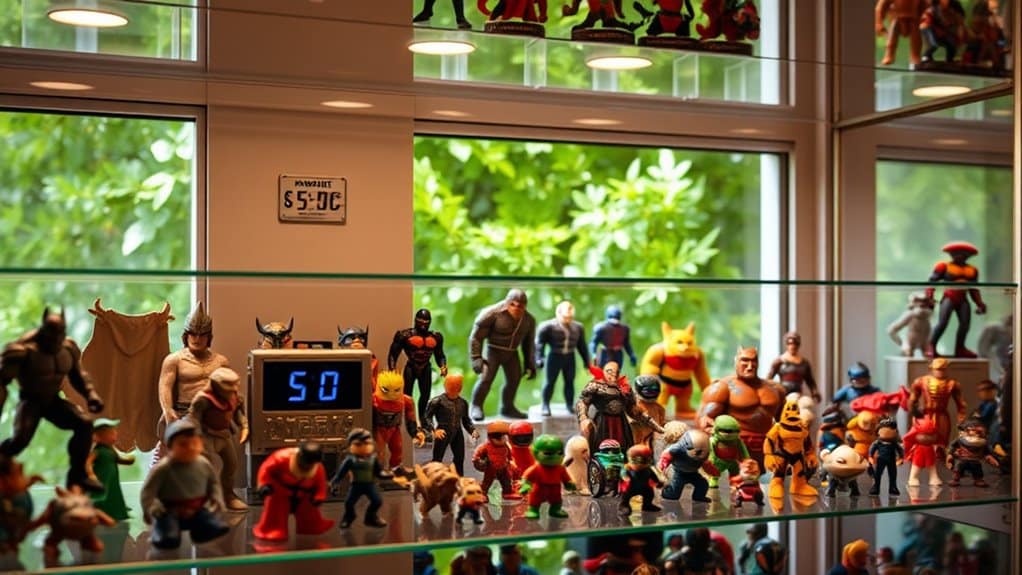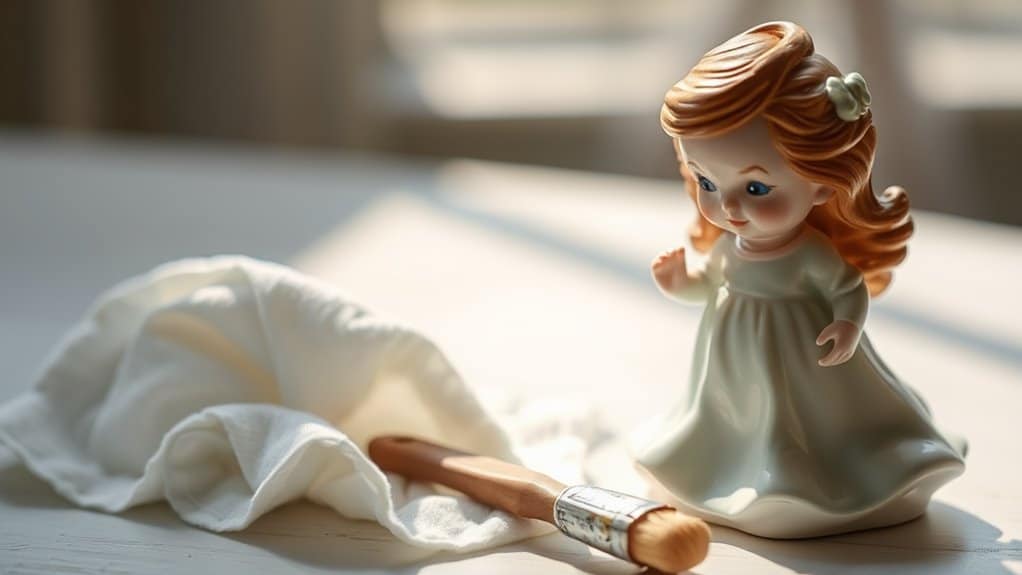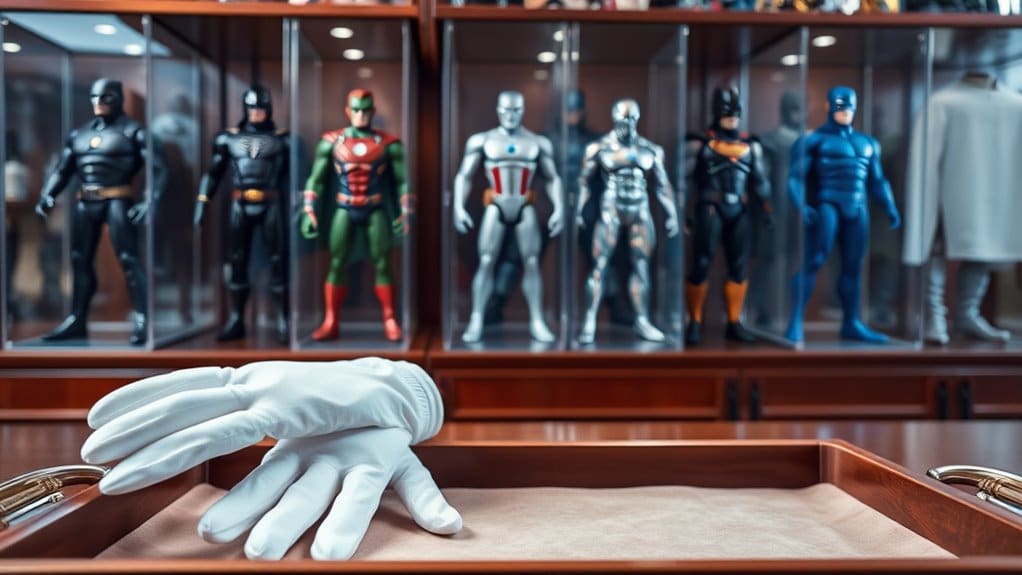
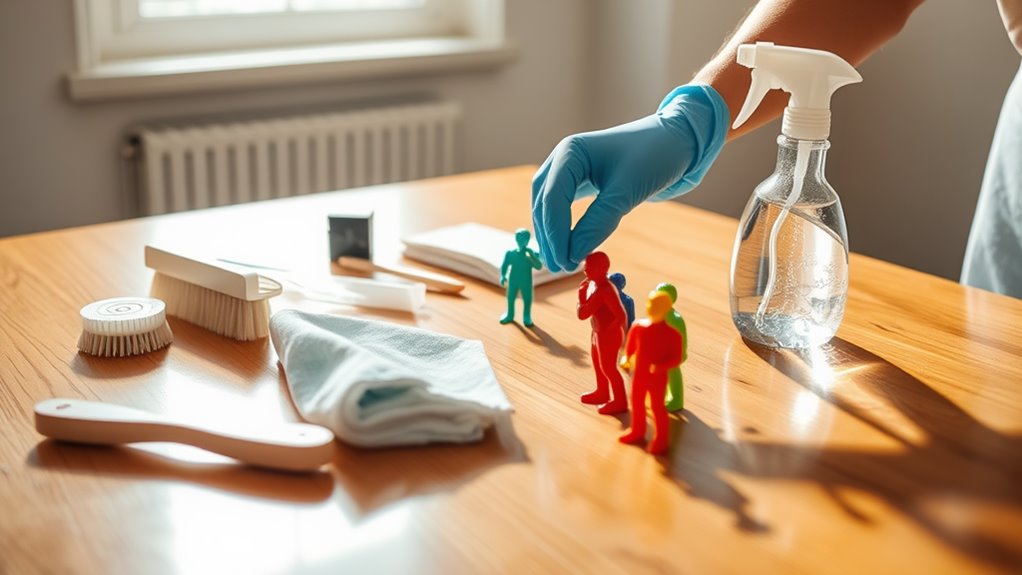
To clean plastic figures, first identify the material—typically PVC, ABS, or polystyrene. Prepare a mild dish soap and distilled water solution. Use a soft cloth or cotton swab for gentle cleaning, focusing on grooves and crevices with a soft-bristled brush. For stubborn stains, try a vinegar solution and rinse with cool water. Dry thoroughly to avoid damage. Store figures in controlled environments with protective packaging to maintain their pristine condition. Discover more versatile cleaning techniques!
Understanding the Material Composition of Plastic Figures
Plastic figures come in various types, and understanding their material composition is key to proper cleaning. You'll find figures made from materials like PVC, ABS, or polystyrene, each requiring different care. Identifying the material helps you choose the right cleaning method, ensuring your figures remain pristine.
To determine the material, check manufacturer labels or product descriptions. PVC figures, for example, are flexible and typically used for detailed models. ABS, on the other hand, is rigid and durable, often found in toys that need structural strength. Polystyrene is lightweight, used in models not intended for heavy handling.
Preparing a Safe Cleaning Solution
When preparing a safe cleaning solution for your plastic figures, it's important to contemplate both effectiveness and material safety. First, gather mild dish soap, distilled water, and a small container. Avoid harsh chemicals, as they can damage your figures. Mix a few drops of dish soap with distilled water in the container. This combination is gentle yet effective for removing grime. It's vital to use distilled water because tap water might contain minerals that could harm the plastic over time.
Before applying the solution, test it on a small, inconspicuous area of the figure to verify it won't cause any discoloration or damage. Use a soft cloth or cotton swab to apply the solution gently, making sure you don't soak the figure.
Dusting Techniques for Delicate Parts
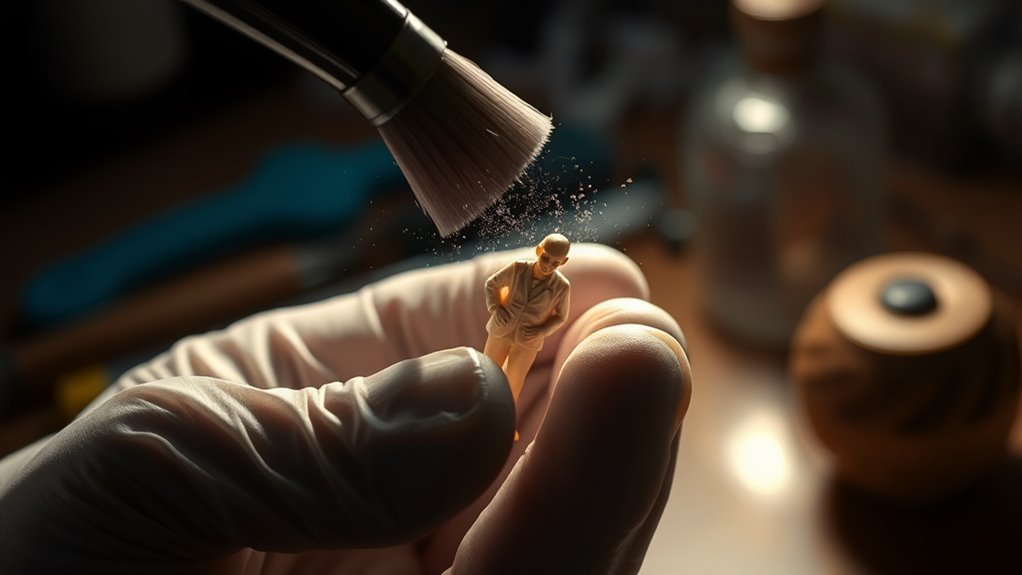
How do you guarantee your delicate plastic figures remain dust-free without causing damage? Start by using a soft, clean microfiber cloth. Gently wipe the surface, focusing on areas prone to dust accumulation like grooves and crevices. Avoid pressing too hard to prevent scratches. For hard-to-reach spots, use a small, soft-bristled brush like a makeup or artist's brush. Gently sweep away dust, ensuring you reach every nook and cranny. Compressed air can help with intricate details; just use short bursts and keep the can upright to avoid moisture. Avoid using feather dusters as they can be too harsh. Regular maintenance is key, so dust your figures routinely to prevent buildup. With these techniques, your figures will stay pristine and damage-free.
Washing Methods for Stubborn Stains
Although dusting keeps your figures looking fresh, washing them is essential for removing stubborn stains that cling to the surface. First, fill a basin with lukewarm water and add a few drops of mild dish soap. Gently submerge your plastic figure, allowing the soapy water to work its magic. Use a soft-bristled toothbrush to carefully scrub the stained areas, guaranteeing not to press too hard. Rinse the figure thoroughly under cool, clean water to remove any soap residue. Pat it dry with a soft, lint-free cloth to prevent any water spots. For particularly stubborn stains, consider using a bit of white vinegar mixed with water. Just remember, patience and gentle handling guarantee your figures remain in pristine condition.
Tools for Reaching Small Crevices
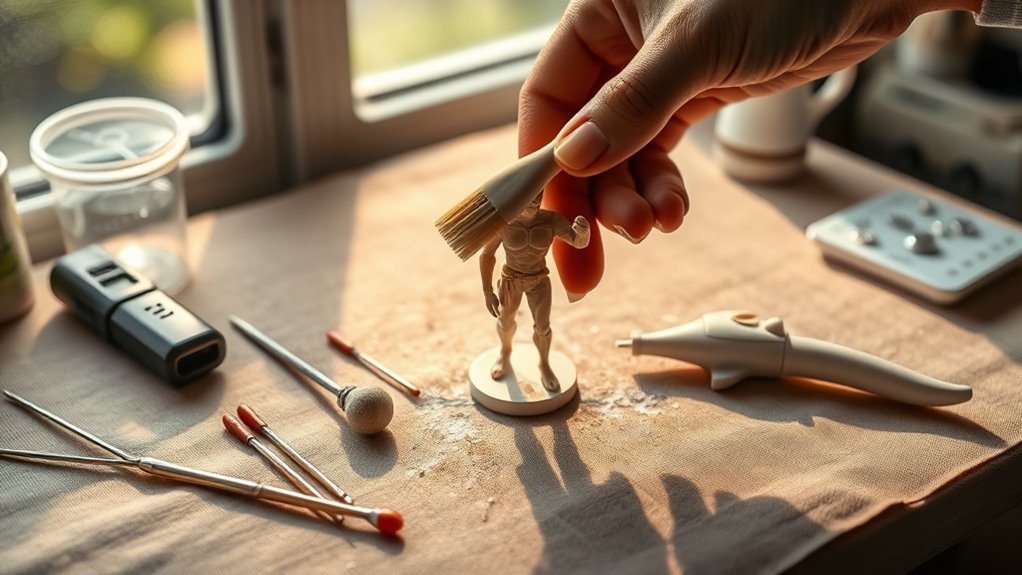
Cleaning those stubborn stains is just one part of maintaining your collection's appeal; reaching the small crevices requires special attention. You've got to get into those tight spots to guarantee every inch of your figures shines. Luckily, there are tools designed just for this. Here's a list of must-have items that'll make you feel like a cleaning superhero:
- Soft-bristled toothbrush: Perfect for gently scrubbing those hard-to-reach areas without scratching the surface.
- Cotton swabs: Ideal for delicate details; they offer precision cleaning.
- Compressed air canister: Blasts dust and debris from narrow gaps effortlessly.
- Dental picks: These let you reach the deepest crevices with accuracy, but use them carefully to avoid damage.
Equip yourself with these tools and conquer those crevices!
Drying Methods to Prevent Water Damage
To prevent water damage to your plastic figures, you'll want to dry them thoroughly. Use an air dryer on a cool setting to gently remove moisture from hard-to-reach areas. Alternatively, try the towel patting technique to carefully absorb water without risking scratches.
Using Air Dryers
When drying plastic figures, using an air dryer can effectively prevent water damage. You'll avoid leaving any residual moisture which could lead to unsightly water spots or even mold growth. Plus, it's a quick method that gets the job done efficiently. Here's why you should consider air drying:
- Speed: Air dryers cut down drying time dramatically, letting you enjoy your figures sooner.
- Safety: No more risking scratches or abrasions from rough towels; air dryers offer a gentle touch.
- Precision: Reach those tricky areas that towels might miss, ensuring a thorough dry.
- Peace of mind: Knowing your figures are dry and safe from water damage brings relief.
Towel Patting Technique
Gently pat your plastic figures with a soft towel to effectively remove moisture without causing damage. Choose a lint-free towel, as fibers can cling to your figures, complicating the cleaning process. Work in sections, focusing on areas where water tends to collect, like joints or crevices. Use light pressure, as excessive force might lead to scratches or stress marks.
Pay extra attention to drying completely, as even small amounts of leftover moisture can lead to water spots or encourage mold growth. After towel patting, inspect your figures closely for any remaining wet spots. In hard-to-reach areas, consider using a dry cotton swab for precision drying. This method guarantees your figures remain pristine while minimizing the risk of water damage.
Polishing Techniques for a Glossy Finish
Achieving a glossy finish on your plastic figures can make them stand out in any collection. Start by selecting a quality plastic polish designed for your figure's material. Apply a small amount onto a soft, lint-free cloth, and gently rub it in circular motions. This technique will enhance shine and minimize scratches. Here are four reasons to polish your figures:
- Enhance Details: A glossy finish highlights intricate details, making your figures pop.
- Boost Aesthetic Appeal: A shiny surface adds a professional touch to your collection.
- Protect the Surface: Polishing forms a protective layer against dust and dirt.
- Increase Value: Well-maintained figures can fetch higher prices if you decide to sell.
Make sure you polish regularly for best results!
Long-term Storage Tips to Maintain Cleanliness
To keep your plastic figures clean over time, focus on storing them in a temperature-controlled environment. This helps prevent dust accumulation and minimizes the risk of warping. Additionally, use protective packaging solutions like acid-free tissue or airtight containers to shield them from dirt and moisture.
Temperature-Controlled Storage Environment
When it comes to preserving the pristine condition of your plastic figures, a temperature-controlled storage environment plays an essential role. Fluctuating temperatures can cause warping and discoloration, ruining your beloved collection. To maintain their integrity, consider these emotional triggers:
- Protection from Heat: Excessive heat can warp and distort your figures, turning cherished memories into melted nightmares.
- Avoiding Cold Damage: Cold environments can make plastic brittle, leading to heartbreaking cracks or breaks.
- Humidity Control: High humidity can lead to mold growth, while low humidity can cause plastic to dry out and crack. Neither is a friend to your collection.
- Stability is Key: Consistent temperatures mean your figures won't suffer from the stress of constant expansion and contraction, ensuring they remain flawless.
Your figures deserve the best care possible.
Protective Packaging Solutions
Properly safeguarding your plastic figures with protective packaging solutions is essential for long-term cleanliness and preservation. Start by wrapping each figure in acid-free tissue paper to prevent scratches. Use plastic bags made from polyethylene or polypropylene—avoid PVC, which can emit harmful chemicals over time. Consider storing the figures in sturdy plastic containers with airtight seals to protect against dust and moisture. Don't forget to add desiccant packs to absorb any lingering humidity.
Label each container clearly, so you can find your figures easily without unnecessary handling. Keep them in a cool, dry place away from direct sunlight, which can cause fading. Regularly check your storage solutions for any signs of wear or damage, ensuring your collection remains pristine for years.
Frequently Asked Questions
Are There Eco-Friendly Cleaning Solutions for Plastic Figures?
Yes, you can use eco-friendly solutions like vinegar and water or mild dish soap. Mix them with warm water, and you'll effectively clean your plastic figures without harming the environment or using harsh chemicals.
How Often Should Plastic Figures Be Cleaned?
You might think cleaning them frequently isn't necessary, but dust accumulates quickly. Clean your plastic figures every couple of weeks. Regular cleaning prevents buildup and keeps them looking new, so don't procrastinate on this simple task.
Can UV Light Affect the Cleaning Process of Plastic Figures?
Yes, UV light can affect cleaning plastic figures. It may degrade the plastic over time, causing discoloration or brittleness. Use it sparingly and make certain you're not exposing them to prolonged sunlight or intense artificial UV sources.
What Are the Best Practices for Handling Fragile Plastic Figures During Cleaning?
When handling fragile plastic figures, support them with both hands, use a soft brush for dusting, and avoid harsh chemicals. Don't rush the process; be gentle and patient to prevent damage. Always guarantee a stable workspace.
Are There Specific Precautions for Cleaning Painted Plastic Figures?
Imagine accidentally stripping paint from a cherished collectible. Use a soft cloth with mild soapy water, ensuring the paint remains intact. Test on a small area first to avoid any damage. Handle with care and patience.
At a Glance
You've learned how to understand materials, prepare safe solutions, and dust delicate parts. You've mastered washing stubborn stains, reaching small crevices, and drying without damage. You've polished for a glossy finish and discovered storage tips for long-term cleanliness. With these techniques, you're ready to tackle any cleaning challenge plastic figures present. Keep your figures pristine, your methods consistent, and your passion for collecting alive. Remember, a clean collection is a cherished collection.