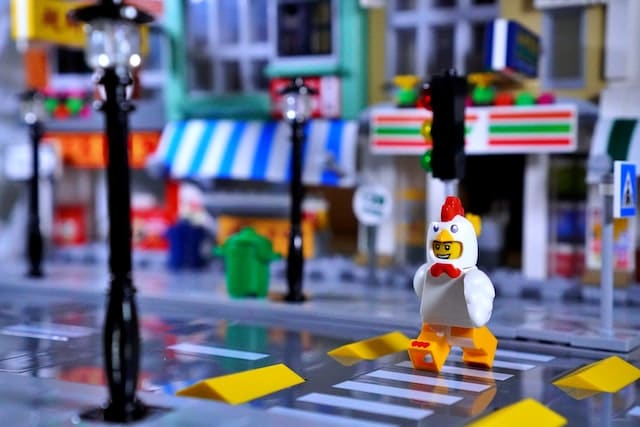

To add realistic backdrops to your toy dioramas, start by choosing sturdy materials like foam board for support and textured paper or fabric for depth. Use painting techniques with acrylics to match your diorama’s theme and enhance realism. High-quality printed images or digital displays can offer dynamic elements. Guarantee lighting consistency to maintain mood, and experiment with matching textures and colors. Keep your backdrop looking great. Discover more strategies to elevate your diorama’s authenticity.
Choosing the Right Materials for Your Backdrop
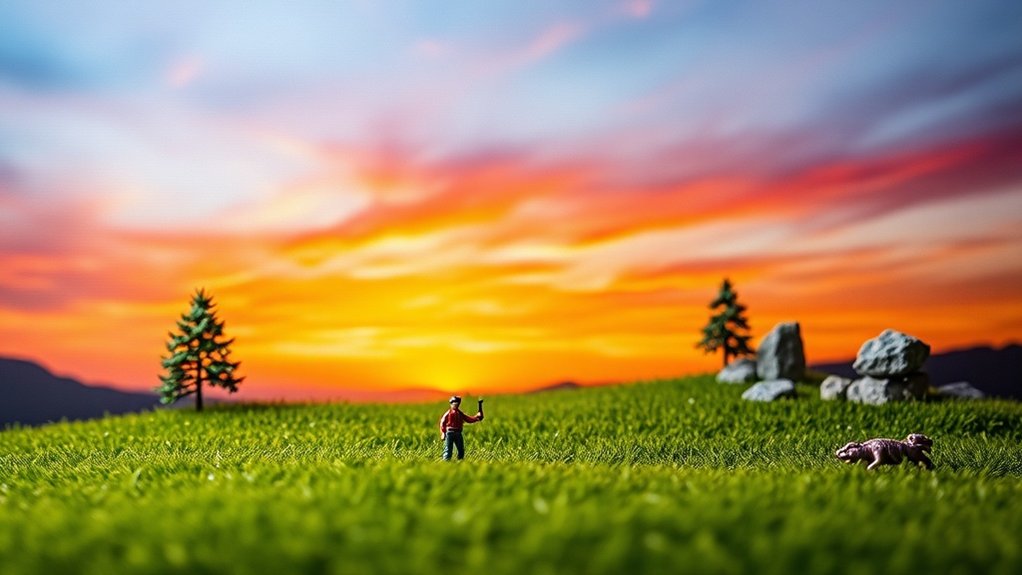
Selecting the right materials for your backdrop is essential in making your toy diorama come to life. Start with a sturdy base; foam board or thick cardboard provides excellent support without adding unnecessary weight. Consider using textured paper or fabric that complements your diorama’s theme. These materials add depth and realism, making your scene more immersive.
Think about incorporating elements like lightweight wood or plastic to create a framework for your backdrop. These materials allow you to easily attach or layer additional pieces, such as small props or foliage. Don’t forget to explore specialty papers, like those mimicking stone or wood, which can enhance authenticity. Always guarantee your materials are easy to cut and manipulate, so you can customize your backdrop to your exact vision.
Painting Techniques for Creating Scenic Backgrounds
When you’re ready to bring your toy diorama to life with scenic backgrounds, mastering a few painting techniques can make all the difference. Start by choosing a color palette that complements your diorama’s theme. Use acrylic paints for versatility and quick drying time. Begin with a base coat, applying broad strokes to cover the backdrop. Once dry, add depth with layers using sponges or dry brushes for texture. Techniques like stippling can create foliage effects, while blending creates smooth skies or water. Pay attention to light sources in your scene; use lighter shades to mimic highlights and darker ones for shadows. Practice on scrap paper before committing to your backdrop, ensuring you’re comfortable with your technique. With patience, your diorama will gain a realistic touch.
Using Printed Backdrops for Added Realism

A printed backdrop can transform your toy diorama, adding a new level of realism and depth. It lets you create immersive environments without needing advanced painting skills. Here’s how to use printed backdrops effectively:
- Choose High-Quality Images: Look for images with high resolution and vibrant colors. They should align with your diorama’s theme, whether it’s a bustling cityscape or a serene forest.
- Size Matters: Verify the printed backdrop fits your diorama’s dimensions properly. A seamless fit enhances the illusion of space and depth.
- Print on Suitable Material: Use matte paper to reduce glare. Glossy finishes can distract from your scene.
- Secure Properly: Attach your backdrop to a sturdy frame or board. This prevents warping and maintains a smooth appearance.
Incorporating Digital Displays Into Your Diorama
To bring your toy diorama to life, consider incorporating digital displays that add dynamic elements and realism. Start by selecting a digital screen or tablet that fits the scale and theme of your diorama. You can display looping videos or animated scenes that transform static backgrounds into enchanting environments. For instance, use footage of flowing water for a waterfall or bustling cityscapes for urban settings.
Ensure the digital screen is securely mounted behind your diorama. Adjust brightness and contrast settings to blend seamlessly with your physical elements. You can control the display remotely, allowing you to change scenes effortlessly. This approach not only enhances visual appeal but also offers versatility. With digital displays, your diorama can transport viewers into ever-changing, vivid worlds.
Crafting 3D Elements for Depth and Dimension

When crafting 3D elements for your diorama, start by using layering techniques to add realism. Choose materials that guarantee durability, so your creations withstand time and handling. By focusing on these aspects, you’ll bring depth and dimension to your scene, making it more engaging and lifelike.
Layering Techniques for Realism
Even though creating realistic backdrops for toy dioramas might seem challenging, mastering layering techniques can greatly enhance depth and dimension. Start by stacking elements to create a 3D effect. Here’s how:
- Foreground Elements: Position smaller objects or figures at the front to grab attention. These could be rocks, plants, or miniature props that fit your theme.
- Middle Ground Textures: Use medium-sized items like hills or fences to create a middle layer, adding complexity and interest.
- Background Details: Paint or print larger scenic elements, such as mountains or skies, to form the backdrop, giving a sense of vastness.
- Overlapping Layers: Verify each layer slightly overlaps the next to create a seamless progression, enhancing the overall realism of your diorama.
Material Selection for Durability
Selecting the right materials is essential for crafting durable, 3D elements that bring depth and dimension to your toy dioramas. Start with lightweight foam board, which is easy to cut and shape yet sturdy enough to support various layers. Use balsa wood for structural elements; it’s resilient and easy to paint. For textural details, consider polymer clay. It offers flexibility and durability once baked. Acrylic paint is your best choice for coloring—it adheres well and doesn’t chip easily. Don’t forget to seal everything with a clear, matte spray to protect your work. Also, hot glue provides quick adhesion and dries clear, ensuring your elements stay in place. By choosing the right materials, you’ll create dioramas that withstand time and handling.
Lighting Techniques to Enhance Backdrop Effects
To make your toy dioramas come to life, you’ll want to focus on lighting techniques that enhance your backdrop effects. Experiment with shadow creation techniques to add depth, and use diffused lighting to soften harsh edges. Don’t forget to adjust color temperature to match the mood and setting of your scene.
Shadow Creation Techniques
While creating realistic backdrops for toy dioramas, mastering shadow techniques can greatly enhance the visual appeal of your scene. Shadows add depth and dimension, making your diorama more lifelike. Here’s how you can create effective shadows:
- Position Your Light Source: Place it at an angle to create natural-looking shadows. Experimenting with different angles will help you find the most realistic effect.
- Use Reflectors: These help control shadow intensity. A simple white card can soften harsh shadows, adding subtlety to your scene.
- Layer Your Backdrop: Use cutouts or props in front of your backdrop to cast shadows, adding depth to the diorama.
- Adjust Light Intensity: Dim your lights slightly to achieve softer shadows, enhancing realism and mood.
Diffused Lighting Strategies
Creating an enchanting toy diorama often hinges on how well you can manage light diffusion. You can enhance your backdrop’s realism by softening harsh shadows and evenly distributing light. Start by using thin, white materials like parchment paper or sheer fabric to cover your light sources. This will help diffuse light effectively, reducing glare and creating a gentle, natural ambiance.
Position your lights strategically around the diorama, aiming for a balanced illumination that highlights features without overpowering them. Consider using multiple low-intensity lights rather than one bright source. This approach allows for more control over shadow and highlight placement. Remember, the goal is to mimic natural light as closely as possible, giving your diorama a more immersive and lifelike appearance.
Color Temperature Adjustments
As you perfect the lighting in your toy diorama, considering color temperature adjustments will further elevate the realism of your backdrop. Color temperature can dramatically affect how your scene is perceived, making it vital for enhancing the overall effect. Here’s how you can use it effectively:
- Cool Tones: Use cooler temperatures (5000K-6500K) to mimic daylight, creating a crisp and clear atmosphere. It’s perfect for outdoor scenes.
- Warm Tones: Warmer temperatures (2700K-3000K) add a cozy, intimate glow, ideal for evening settings or indoor scenes.
- Accent Lighting: Adjust specific areas with contrasting temperatures to highlight focal points or add depth.
- Consistency: Maintain consistent temperature across the scene to preserve cohesion and avoid abrupt changes that break immersion.
Experiment with these adjustments to find the perfect balance for your diorama.
Selecting Colors to Match Your Diorama’s Theme
Why are colors so essential in bringing your diorama’s theme to life? Colors evoke emotions and set the mood, making your miniature world believable. To choose the right colors, first identify your diorama’s theme. Are you creating a vibrant cityscape or a tranquil forest? Each setting demands its own palette. Consider the primary colors in your scene and select complementary shades for your backdrop. For an urban look, opt for grays, blues, and metallics. If it’s a lush forest, go for greens, browns, and earth tones. Ascertain your backdrop colors harmonize with the diorama’s elements, enhancing realism. Use color swatches or digital tools to visualize your choices. Ultimately, your color selection will unify your scene, drawing viewers into your miniature world.
Tips for Seamlessly Blending Backdrops With Diorama Elements
To make your diorama look cohesive, pay close attention to matching the colors and textures of your backdrops with the elements inside the scene. Confirm that perspective and scale remain consistent to avoid jarring shifts that can break the illusion. By aligning these aspects, you’ll create a seamless blend that enhances the overall realism of your diorama.
Matching Colors and Textures
When you’re aiming for a realistic effect in your toy dioramas, matching colors and textures between the backdrop and the diorama elements is crucial. To accomplish a seamless blend, consider these steps:
- Color Matching: Identify the dominant colors in your diorama. Use paint swatches or digital tools to find corresponding hues for your backdrop.
- Texture Consistency: Examine the surface textures of your diorama elements. For instance, if your scene includes rocky terrain, make sure your backdrop mimics this roughness with similar materials or visual effects.
- Lighting Harmony: Adjust the lighting in your scene to make colors appear consistent and natural, reducing harsh contrasts.
- Material Integration: Use similar materials for both diorama parts and backdrops, like paper, fabric, or foam, to maintain a cohesive look.
Perspective and Scale Consistency
While matching colors and textures sets the visual stage for your toy diorama, guaranteeing perspective and scale consistency brings the entire scene to life. First, determine the viewpoint. Imagine you’re looking through a camera lens to visualize how the elements align. The backdrop’s horizon line should match your diorama’s eye level. This guarantees a natural flow. Next, consider scale. If your figures are 1:12 scale, the backdrop should complement that proportion. A towering tree shouldn’t dwarf a figure unless intended. Use grid paper to sketch your scene, testing how elements fit together. Finally, adjust lighting to create depth, casting shadows that match the scene’s perspective. With these techniques, your diorama will offer a seamless blend between foreground and background.
Experimenting With Textures for a Lifelike Appearance
Creating a lifelike appearance in your toy diorama requires a keen eye for texture experimentation. By playing with different materials, you can add depth and authenticity to your scenes. Here are four ways to explore textures effectively:
- Natural Elements: Use sand, small stones, or twigs to replicate outdoor environments. They add realism and are easily accessible.
- Fabric Scraps: Old clothes or fabric remnants can mimic grass, dirt, or even water. Choose textures that match your scene’s theme.
- Paint Techniques: Experiment with dry brushing, stippling, or sponging to create varied surfaces. These methods can simulate anything from rocky terrain to cloudy skies.
- Found Objects: Repurpose everyday items like bottle caps or foil to craft unique textures. Their unexpected forms often surprise and delight.
Maintaining and Preserving Your Diorama’s Backdrop
To keep your diorama’s backdrop looking its best, regular maintenance is vital. Start by dusting it gently with a soft brush or microfiber cloth to avoid scratches. If your backdrop is made of paper or fabric, keep it away from direct sunlight, as UV rays can cause fading. Consider using UV-protective sprays for additional protection. For backdrops made of more durable materials like plastic or wood, a slightly damp cloth can help remove more stubborn dirt.
Store your diorama in a cool, dry place to prevent moisture damage. Avoid using harsh chemicals or cleaners that might strip colors or textures. If you notice any damage, address it promptly to prevent further deterioration. Consistent care will guarantee your backdrop remains vibrant and enhances your diorama’s realism.
Frequently Asked Questions
How Do I Ensure My Backdrop Is Proportionate to the Toy Figures?
Measure your toy figures’ height first. Create or select a backdrop that complements their size. Confirm elements like doors or trees match the figures’ scale. Adjust dimensions until everything looks naturally aligned, enhancing the diorama’s realism.
What Tools Are Best for Cutting Backdrop Materials Accurately?
You’ll want to use a sharp utility knife or a precision cutting tool for accuracy. A cutting mat helps protect surfaces while guiding your cuts. A metal ruler guarantees straight lines, avoiding any wobble or imprecision.
Can I Use Household Items to Create Realistic Backdrops?
Yes, you can use household items for realistic backdrops. Worried they won’t look professional? Try using old sheets for skies or cardboard for structures. Paint adds detail, and natural light enhances realism. Get creative and experiment!
How Do I Transport My Diorama Without Damaging the Backdrop?
Wrap your diorama in bubble wrap or a soft cloth to protect it during transport. Use a sturdy box slightly larger than your diorama. Fill any empty space with packing materials to prevent movement and damage.
What Are Common Mistakes Beginners Make With Toy Diorama Backdrops?
You’ll often find beginners make backdrops too busy, overshadowing the diorama. Coincidentally, it’s common to forget scale, making everything look mismatched. Don’t neglect lighting; it’s essential for ambience. Balance and simplicity are key to success.
At a Glance
You’ve now revealed the ultimate secrets to crafting the most lifelike diorama backdrops imaginable. With these tips, your toy scenes will leap off the table, defying reality itself! Whether you’re painting, printing, or going digital, each technique adds a layer of magic to your masterpiece. Don’t forget to experiment with textures and colors to guarantee everything blends seamlessly. Keep your diorama well-maintained, and it will enchant viewers for generations to come. Now, go create your miniature world!