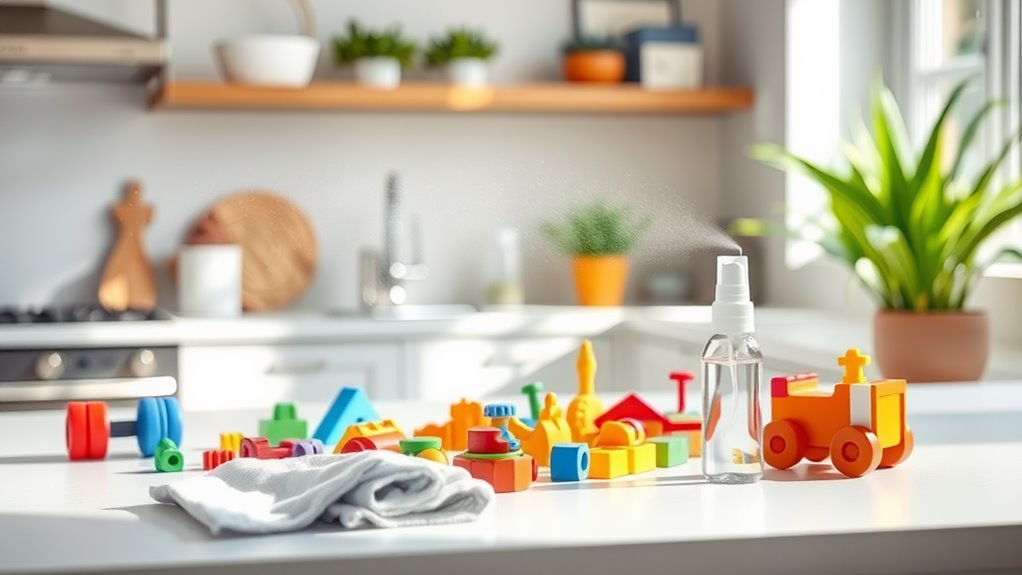
To disinfect toys without causing damage, select non-toxic solutions like vinegar, and always check labels for safety. Test for colorfastness on a hidden part of the toy first. Stick with mild soap or water-vinegar mixtures and gently clean using soft cloths. Avoid high temperatures, opting for warm water instead. Guarantee toys dry thoroughly to prevent mold, shaking out any trapped moisture. By mastering these techniques, you can maintain a safe and enjoyable play environment while learning more details.
Choose the Right Cleaning Solution
When it comes to disinfecting toys, choosing the right cleaning solution is essential. You want to guarantee you're effectively eliminating germs without damaging the toys. Look for non-toxic disinfectants, especially those labeled safe for children. These options are less likely to harm your little ones while being tough on bacteria. White vinegar and hydrogen peroxide are excellent natural choices that kill germs without harsh chemicals. For plastic or rubber toys, diluted bleach solutions can be effective, but guarantee you rinse thoroughly. Always read the labels for instructions and safety precautions. Avoid using abrasive cleaners that might scratch surfaces, making them breeding grounds for germs. By selecting the right products, you'll maintain a clean and safe play environment.
Test for Colorfastness
After selecting the right cleaning solution, it's important to guarantee it won't damage or discolor your child's toys. To do this, perform a colorfastness test on a small, inconspicuous area of the toy. Apply a tiny amount of the cleaning solution on a hidden spot, like under a foot or inside a seam. Let it sit for a few minutes and then gently blot with a white cloth. Check the cloth for any color transfer. If there's no bleeding or fading, it's safe to proceed with cleaning the entire toy. If you notice any color transfer, try a different solution. Testing first verifies your child's beloved toys remain vibrant and intact, avoiding any unwelcome surprises during the cleaning process.
Use Gentle Cleaning Techniques
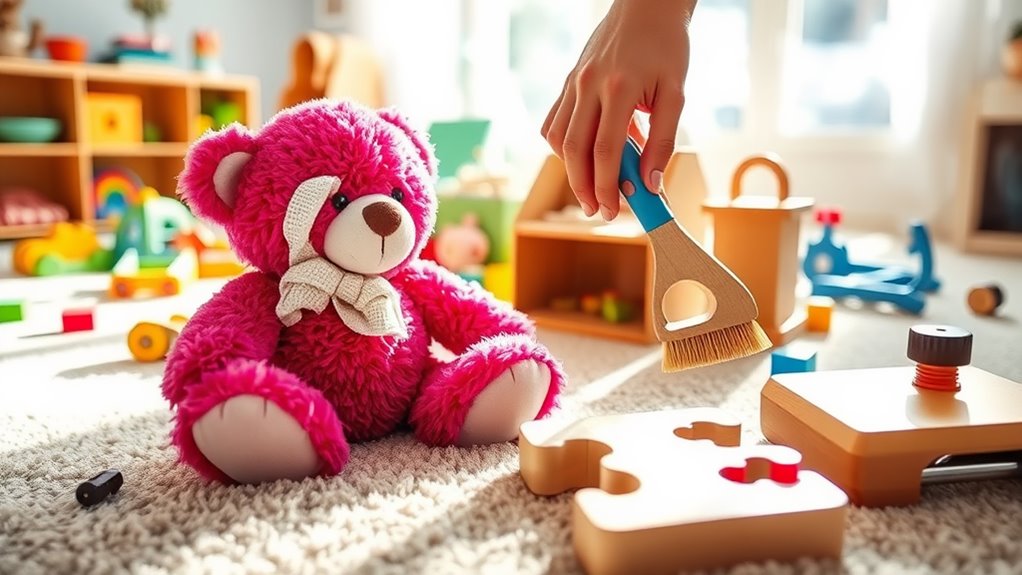
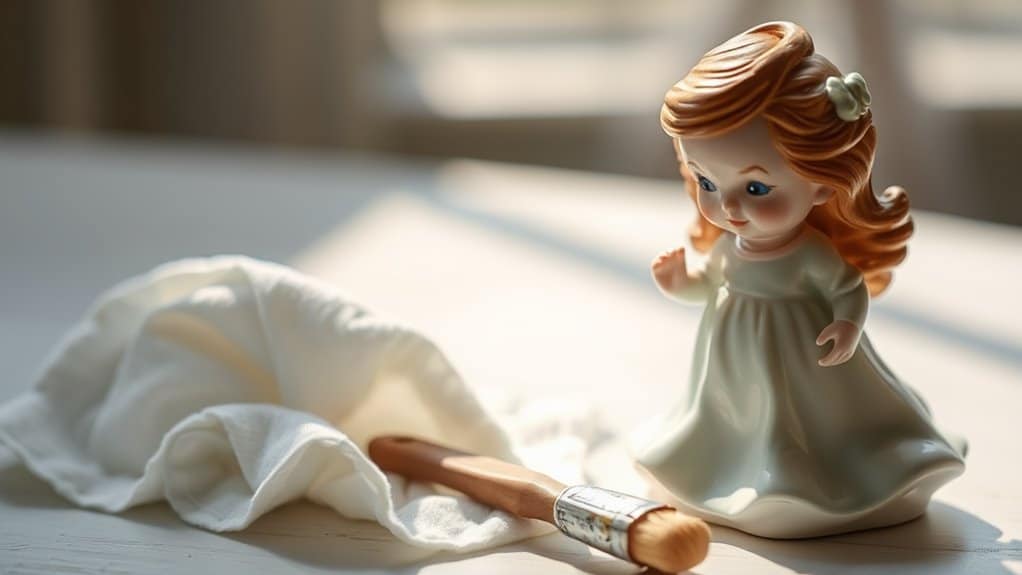
As you begin cleaning your child's toys, remember that gentle techniques are crucial to maintaining their condition. Start by using mild soap or a solution of water and white vinegar. These options effectively remove germs without harsh chemicals that could damage the toy's material. Use a soft cloth or sponge to wipe the surface, being careful not to scrub too hard, which might cause scratches or wear.
For smaller crevices, a toothbrush with soft bristles works wonders without being abrasive. After cleaning, thoroughly rinse the toy to remove any residue, preventing skin irritations or accidental ingestion. Pat the toy dry with a clean towel or let it air dry. By using these gentle methods, you guarantee your child's toys stay safe and last longer.
Avoid High Temperatures
While disinfecting toys, don't expose them to high temperatures, as this can lead to warping or damage. Many toys are made from materials like plastic or rubber, which can melt or deform under excessive heat. Instead of using boiling water or a dishwasher's hot cycle, opt for warm, soapy water to clean them. This method is effective without risking the toy's integrity.
If you're using disinfectant wipes or sprays, make sure the toys are air-dried naturally at room temperature. Avoid placing them near heaters or in direct sunlight, as this can lead to fading or cracking. Remember, gentle care extends the life of toys, keeping them safe and enjoyable for longer. Always prioritize low-heat cleaning methods to maintain their structure and appearance.
Dry Toys Thoroughly
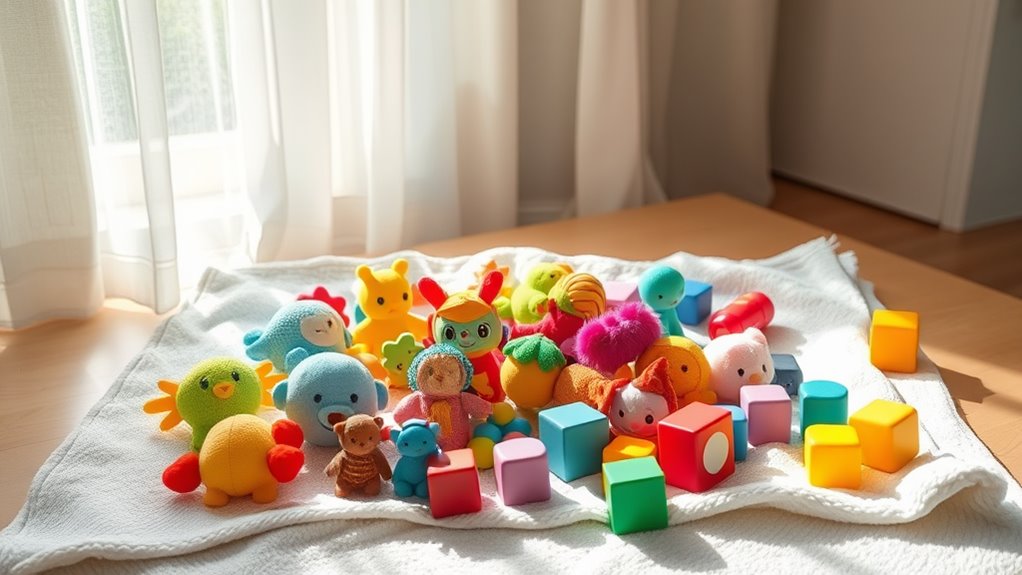
Ensuring toys are dried thoroughly is as important as cleaning them. Moisture left on toys can lead to mold growth, which poses health risks to children. After cleaning, take the time to dry each toy carefully. Use a clean towel to wipe off excess water and let them air-dry completely. For plush toys, consider using a hairdryer on a cool setting. It's essential to avoid trapping moisture in small crevices or inside hollow toys, so shake them well to release any water droplets.
Place toys in a well-ventilated area or under a fan to speed up the drying process. If you've got a sunny spot, let the toys bask in natural sunlight, as it can help eliminate bacteria. Remember, dry toys are safer toys!
Frequently Asked Questions
How Often Should I Disinfect My Child's Toys?
You should disinfect your child's toys weekly or more often if they're frequently shared or your child is sick. Always follow the specific material care recommendations to guarantee you don't damage the toys during the cleaning process.
Can I Use Vinegar on All Types of Toy Materials?
You can't use vinegar on all toy materials. It's great for plastics and some fabrics but avoid using it on wooden toys or electronic parts, as it can cause damage. Always check manufacturer guidelines for specific care instructions.
Are There Natural Alternatives to Commercial Disinfectants?
You can use natural alternatives like vinegar, baking soda, or hydrogen peroxide instead of commercial disinfectants. They're effective at killing germs and safe for most materials. Always test a small area first to prevent damage.
How Can I Disinfect Electronic Toys Without Causing Damage?
You balance cleanliness with care by using a cloth dampened with a mixture of water and mild soap. Avoid excess moisture. Clean gently, yet thoroughly, ensuring electronic components stay dry while the toy's surface is sanitized.
What Signs Indicate a Toy Is Not Safe to Disinfect?
You should check for any exposed wires, batteries, or delicate materials that could be damaged by moisture. If the toy's instructions advise against using liquids, it's a clear sign that it's not safe to disinfect.
At a Glance
By choosing the right cleaning solution, testing for colorfastness, and using gentle techniques, you'll keep your little one's playthings in tip-top shape. Avoid high temperatures to prevent any unfortunate mishaps, and guarantee toys are thoroughly dried to avoid unwanted surprises. With these steps, you're not just cleaning—you're preserving memories and guaranteeing a safe, happy playtime environment. Remember, a little care today saves a world of trouble tomorrow, keeping both toys and smiles intact.