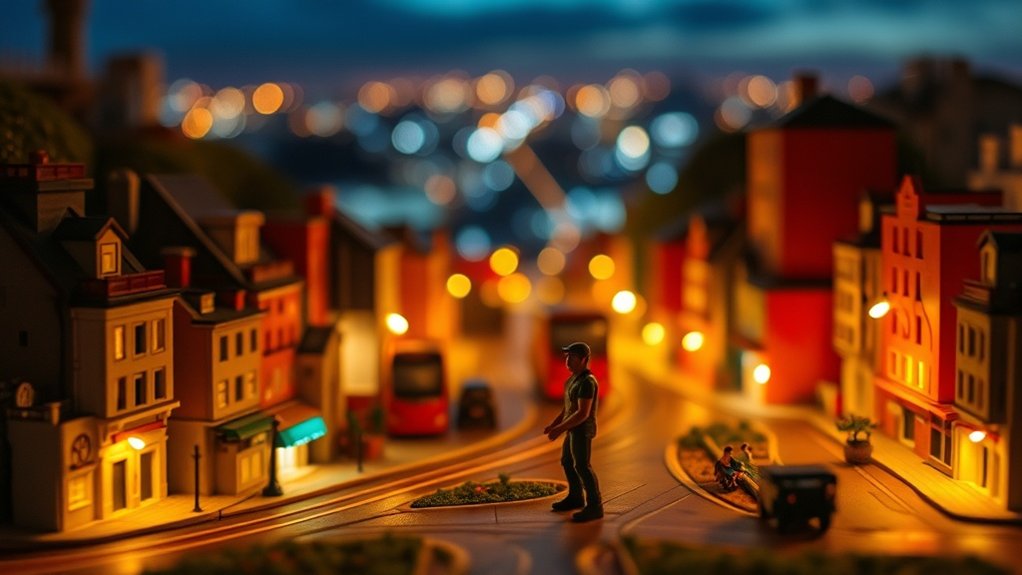
To use LED lighting inside dioramas for toy photos, start by selecting appropriate LEDs that match your scene’s scale and theme. Place compact LED strips or spotlights strategically to highlight key elements, and adjust angles for texture and depth. Experiment with different colors and light intensities to enhance the mood. Troubleshoot any lighting issues by checking connections and voltages. Dive further into methods to master lighting effects and elevate your toy photography artistry.
Choosing the Right LED Lights for Your Diorama

When you’re setting up LED lighting for your diorama, choosing the right lights is essential for achieving the desired effect. Start by considering the scale and theme of your diorama. If you’re aiming for a realistic look, opt for LEDs that mimic natural light, like warm white or soft daylight. For fantasy or sci-fi settings, colored LEDs can add a dramatic flair. Pay attention to the brightness, measured in lumens, to guarantee your scene isn’t too dim or overly bright. Compact, flexible LED strips or small spotlights work well for accentuating specific areas without overwhelming the space. Consider power sources too; battery-operated options offer more flexibility in placement. Don’t forget to check the lights for heat output, as excessive heat can damage your setup.
Setting Up Your Diorama for Optimal Lighting
To set up your diorama for ideal lighting, make certain you strategically position your LED lights to highlight key elements and create depth. Place lights at varying angles to emphasize texture and dimension. Use spotlights to draw attention to focal points, such as your toy figures or significant props. Don’t forget to balance light sources to avoid harsh shadows or overly bright spots, which can distract from your scene.
Experiment with different light intensities and colors to achieve the mood you want. You might find that a combination of warm and cool lights adds realism and contrast. Arrange your LED lights so they illuminate the backdrop and foreground evenly, maintaining a harmonious look. Adjust until the scene captures the desired atmosphere effectively.
Techniques for Simulating Natural Light and Weather Effects
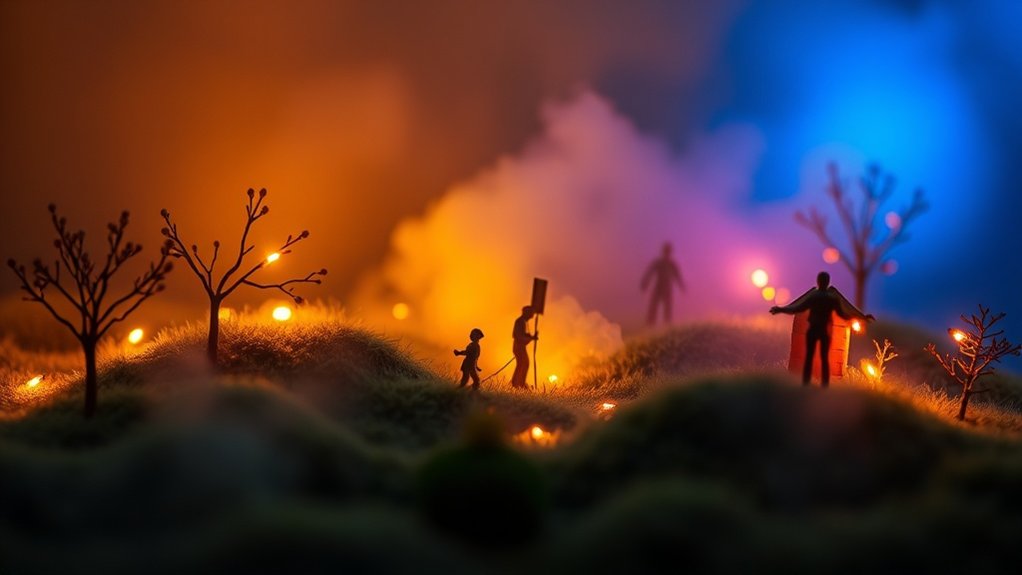
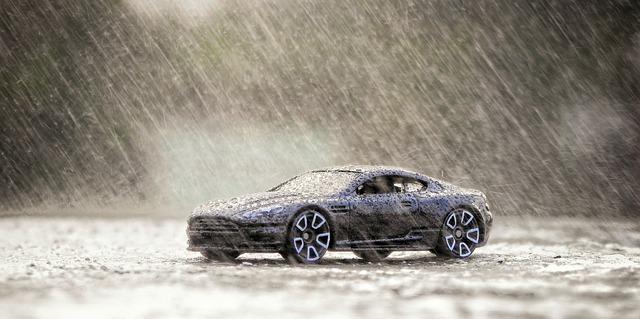
Although mastering the art of simulating natural light and weather effects in your diorama can seem intimidating at first, it’s an exciting opportunity to bring your scene to life. Start by considering the time of day you want to portray. Use warm LEDs for a sunset glow or cool ones for a moonlit night. Angle the lights to mimic sunlight streaming through trees or windows. For rain, attach small LED strips to create the illusion of streaking water. Fog or mist can be simulated using diffusers or a small misting device, backlit by soft LEDs for a realistic effect. Experiment with colored gels to mimic different weather conditions, like a stormy atmosphere. Layering these techniques adds depth and realism to your diorama.
Enhancing Details and Creating Atmosphere With LEDS
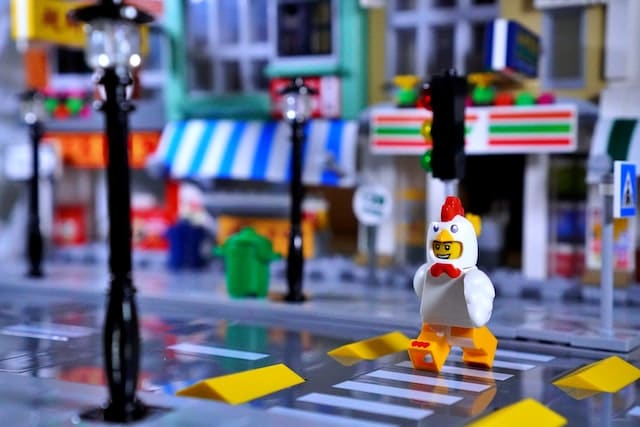
Creating a realistic scene isn’t just about the big picture—it’s the small details that make a diorama truly enchanting. You can use LED lighting to highlight specific elements, like a miniature streetlamp casting a soft glow on a tiny figure. To create atmosphere, consider the mood you want to convey. Warm LEDs can evoke a cozy evening, while cool tones suggest a chilly, moonlit night. Position LEDs strategically to cast shadows that add depth and drama. You can even use flickering LED lights to simulate a fireplace or campfire, bringing your scene to life. Experiment with color filters to enhance specific details, ensuring that your diorama tells a mesmerizing story. LED lighting isn’t just functional—it’s transformative, enhancing every detail.
Troubleshooting Common LED Lighting Issues
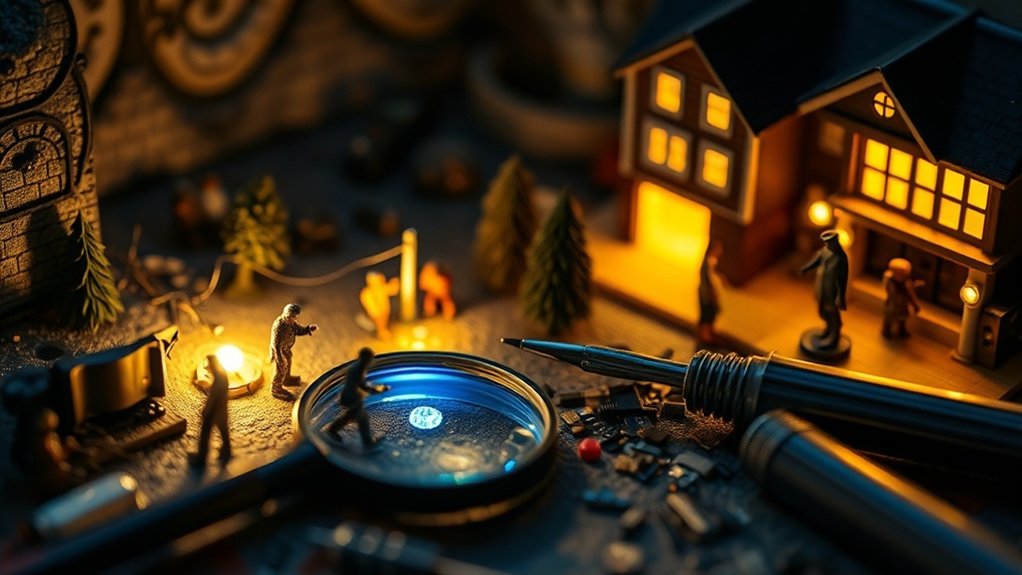
Why do LED lighting issues seem to pop up just when your diorama is almost perfect? Flickering, dimming, or unexpectedly dying LEDs can be frustrating. Start by checking the power source—loose connections or drained batteries might be the culprit. If the lights flicker, inspect the wiring for breaks or frayed ends. Sometimes, a simple repositioning of wires can make all the difference. For dimming issues, verify your voltage matches the LED’s requirements; mismatches can cause poor performance. If an LED won’t light up, test it with a multimeter to confirm it’s not faulty. Remember, using the correct resistor can prevent overheating. By addressing these common problems, you’ll keep your diorama well-lit and ready for stunning toy photos.
Frequently Asked Questions
How Can LED Lights Affect the Color Balance in Toy Photos?
LED lights can greatly impact your toy photos’ color balance. They might introduce cool or warm tones depending on their temperature. Adjust your camera settings or use filters to maintain accurate colors and achieve your desired look.
What Are the Safety Precautions When Using LED Lights in Dioramas?
When using LED lights in dioramas, make certain they don’t overheat by keeping them away from flammable materials. Use proper voltage to avoid short circuits, and check connections regularly. Always turn off lights when not in use.
How Do LED Lights Compare to Traditional Lighting in Terms of Energy Efficiency?
Imagine a race where LED lights sprint ahead of traditional lighting in energy efficiency. You’ll find LEDs consume less power and produce less heat, saving you money and offering a cooler, safer lighting solution.
Can LED Lights Be Used With Different Power Sources Like Batteries or USB?
You can easily use LED lights with various power sources like batteries or USB. They’re versatile, allowing you to adapt to different setups. Just make certain your power supply matches the LED’s voltage and current requirements for peak performance.
How Do You Clean and Maintain LED Lights Used in Dioramas?
Think of your LED lights as the heart of your diorama setup. Regularly dust them gently with a soft cloth, and occasionally check connections for wear. Treat them well, and they’ll keep shining brightly for your photos.
At a Glance
By mastering LED lighting in your dioramas, you become a modern-day Michelangelo, sculpting light and shadow to breathe life into toy photography. You’ve learned to choose the right LEDs, set the perfect stage, and create a symphony of natural light and weather effects. Let your creativity soar as you enhance details and atmosphere, casting a spell that captivates. Remember, even tiny problems have solutions, so troubleshoot with the curiosity of a detective. Illuminate your miniature worlds!