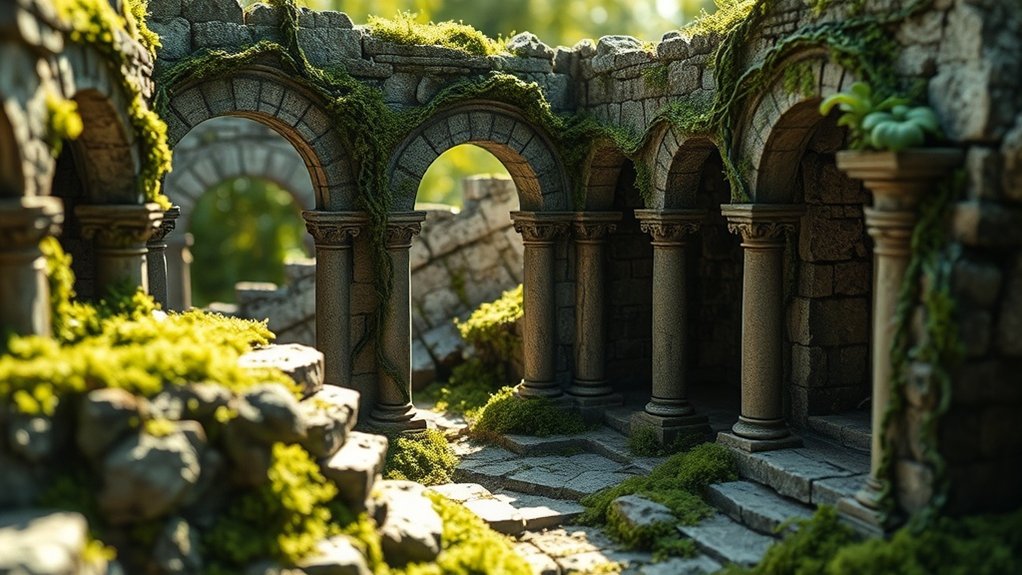
Creating dramatic toy dioramas with miniature ruins and overgrown landscapes involves selecting the right materials and techniques for authenticity. Use foam board for crafting detailed structures and balsa wood for dilapidated beams. Add texture with pastes and enhance realism with moss and fine turf. Research historical elements to guarantee accurate representation, adjusting color schemes for mood. By layering elements and suggesting stories of bygone eras, you can captivate viewers—there’s more to reveal ahead.
Choosing the Right Materials for Realistic Ruins
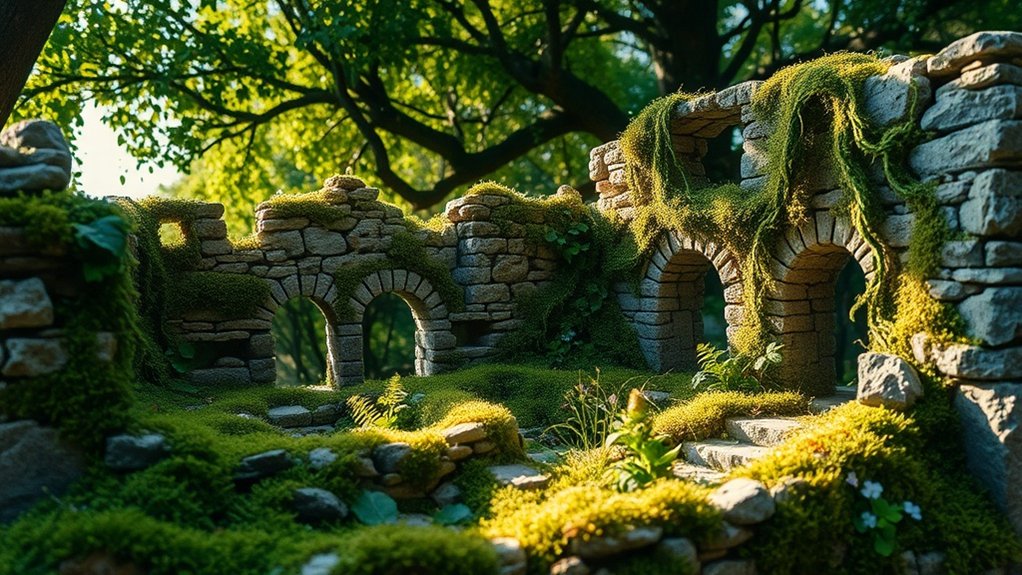
When creating realistic ruins for your toy dioramas, it’s crucial to choose the right materials that will bring your miniature world to life. Start by selecting foam board or insulation foam, as they’re easy to carve and shape into crumbling walls or broken columns. Use textured paint or modeling paste to add a gritty, aged look to these structures. Balsa wood is perfect for crafting shattered wooden beams or fallen structures due to its lightweight and easy-to-cut nature. Incorporate gravel or small rocks to mimic rubble and debris, enhancing the ruinous effect. Metal scraps or wire can add an industrial touch, suggesting decay over time. By thoughtfully choosing these materials, you’ll guarantee your diorama captures the essence of forgotten worlds.
Crafting Overgrowth: Techniques for Lifelike Foliage
Overgrowth can transform your diorama into a vibrant, realistic scene. Start by choosing a mix of materials like moss, miniature ferns, and fine turf. These elements mimic nature’s variety and add texture. You’ll want to use tweezers for precise placement, ensuring each piece fits naturally among ruins. Apply a dab of glue to secure your foliage, but don’t overdo it—too much adhesive can look unnatural.
For added depth, layer different shades of green. This creates shadows and highlights, simulating sunlight filtering through leaves. Experiment with tiny branches or vines spiraling around structures, giving the impression of nature reclaiming its space. Finally, remember to step back and assess your work. Adjust as needed to maintain balance and harmony in your miniature world.
Incorporating Historical Elements Into Your Diorama
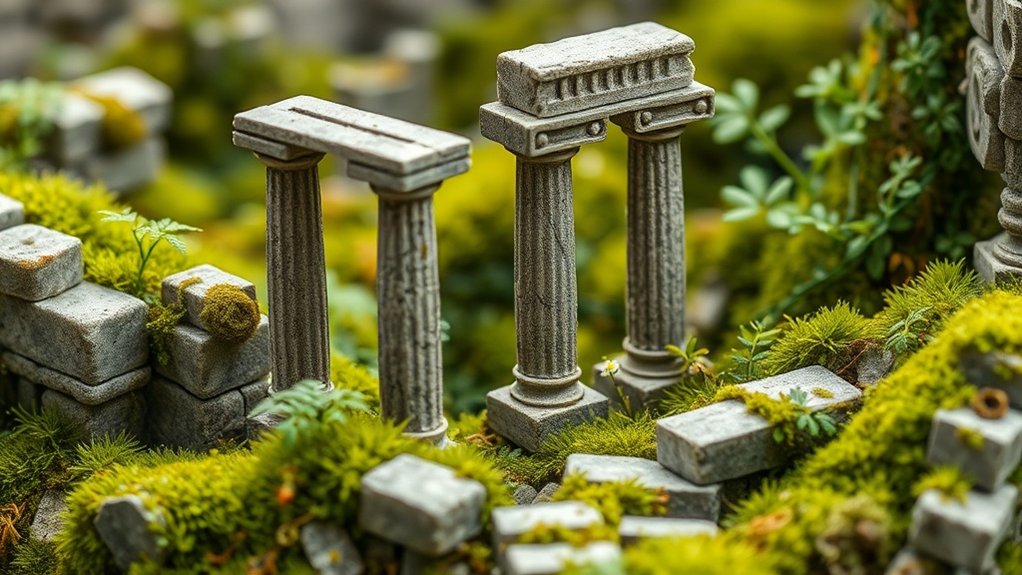
Dioramas come to life when you incorporate historical elements, grounding your scene in a specific time and place. Start by researching the era you want to depict. Look for images, stories, and artifacts that capture the essence of that period. Use these references to inspire your miniature details, like architecture, clothing, and everyday objects.
Choose materials that reflect the age—weathered wood for medieval settings or rusted metal for industrial scenes. Add period-specific items, like a Roman amphitheater or a Victorian lamppost, to enhance authenticity. Don’t forget about color schemes; they can evoke the historical mood. Earthy tones might suggest ancient times, while vibrant colors could indicate modernity. By thoughtfully selecting these elements, you’ll transport viewers to another time and place.
Creating Depth and Perspective With Miniature Ruins
Although often overlooked, the strategic placement of miniature ruins can dramatically enhance the depth and perspective of your diorama. By carefully considering where and how you position these elements, you can create a sense of scale and immersion that draws viewers in. Here’s how you can achieve that:
- Layering: Place larger ruins in the foreground and smaller ones further back. This creates a natural sense of distance, making your scene appear more expansive.
- Angles: Tilt ruins at slight angles to mimic how they’d naturally settle over time. This adds realism and guides the viewer’s eye through the scene.
- Overlapping: Let some ruins partially obscure others. This technique adds complexity and depth, suggesting a multi-layered environment that invites exploration.
Storytelling Through Ruins and Overgrown Landscapes
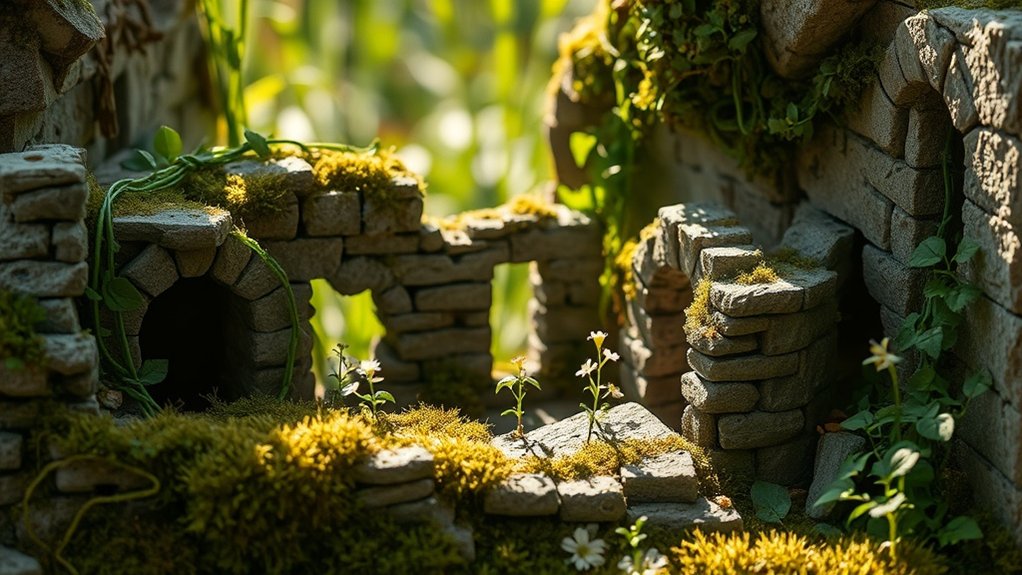
When crafting a diorama, the artful integration of ruins and overgrown landscapes can tell a compelling story that captivates your audience. Imagine an ancient temple, now a crumbling relic where vines weave through the stone, whispering secrets of its past. You can evoke a sense of mystery and history by choosing the right elements. Select ruins that suggest a once-thriving civilization now reclaimed by nature. Consider the mood: is it a peaceful scene of nature’s triumph or a haunting reminder of time’s passage? Use color and texture to highlight contrasts between man-made structures and organic growth. Your audience will be drawn into the narrative, piecing together the story you’ve embedded within the layers of your miniature world.
Frequently Asked Questions
How Do I Prevent Dust Accumulation on My Diorama?
You need a display case to protect your diorama from dust. Regularly dust it with a soft brush and use a gentle vacuum. A controlled environment with less airflow also helps in minimizing dust accumulation.
What Is the Best Way to Store Completed Dioramas?
Did you know 70% of diorama damage occurs during storage? To store your completed dioramas safely, use airtight containers and keep them in a cool, dry place. Regularly check them to guarantee preservation and avoid damage.
Can I Use LED Lights to Enhance My Diorama?
Absolutely, you can use LED lights to enhance your diorama. They add depth and drama, highlighting specific areas and creating mood. Choose battery-operated ones for convenience and flexibility in placement without worrying about power cords.
How Do I Transport a Fragile Diorama Safely?
Wrap your diorama in bubble wrap, securing delicate parts. Use a sturdy box with cushioning material like foam peanuts. Make sure it fits snugly to prevent shifting. Mark the box as fragile and handle it with care.
Are There Recommended Tools for Fine Detailing in Miniature Ruins?
You’ll want to use fine-tipped brushes, dental tools, and a needle file set for precision detailing. Invest in a magnifying lamp for better visibility. Don’t forget a steady hand and patience; they’re your best tools.
At a Glance
As you finish your diorama, you suddenly notice how coincidentally the tiny vine wraps around the miniature column, perfectly capturing the passage of time. Your choice of materials and historical elements creates an unexpected narrative of nature reclaiming lost civilizations. By adding depth and perspective, you’ve unknowingly crafted a scene that tells a story beyond its scale. Embrace these serendipitous moments; they’re what make your diorama not just a model, but a timeless tale.