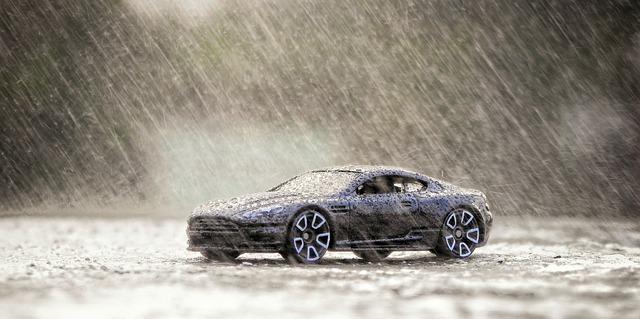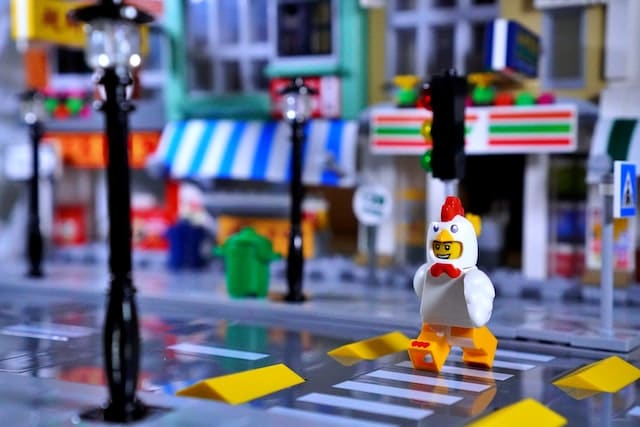
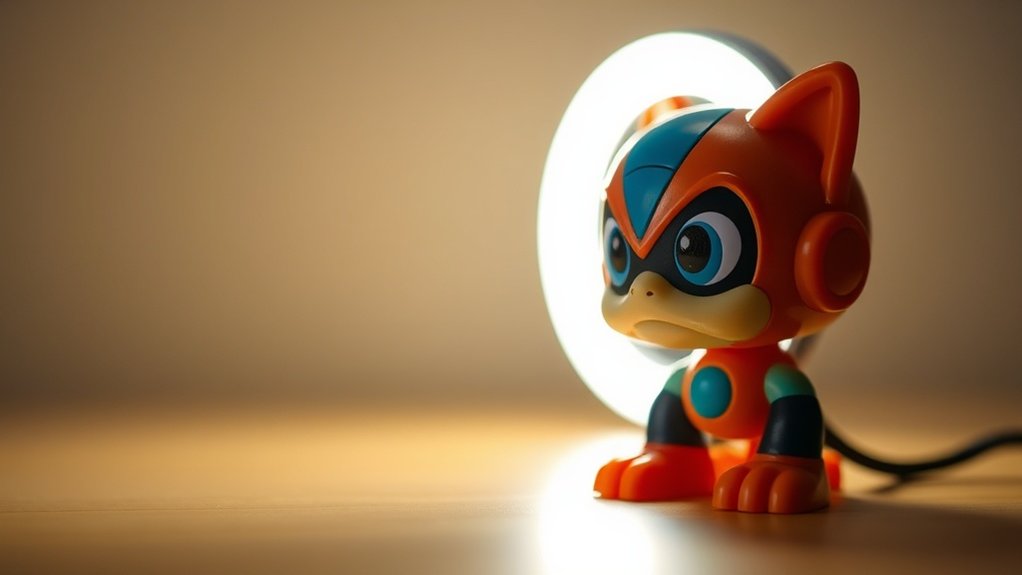
Using a ring light for toy photography offers a consistent and even illumination, highlighting vivid colors and intricate details while reducing shadows and creating enchanting catchlights in toy eyes. However, it can produce unwanted reflections on shiny surfaces and may not evenly light larger scenes. Its size and need for a power source also pose challenges. Exploring further can reveal more about maximizing your toy photography with or without a ring light.
Benefits of Using Ring Lights in Toy Photography

When you’re capturing the intricate details of your favorite action figures or dolls, a ring light can elevate your toy photography to new heights. It provides a consistent light source that helps highlight textures and colors, making your toys look vivid and lifelike. By reducing shadows, it guarantees your figures’ features are crisp and clear, enhancing their appeal in every shot. You can also adjust the brightness to suit different environments, giving you control over how your subjects appear. Plus, with its circular design, a ring light is perfect for creating enchanting catchlights in your toys’ eyes, adding a touch of realism. Using a ring light simplifies your setup and lets you focus more on creativity and less on complicated lighting adjustments.
How Ring Lights Create Even Illumination
Despite its simplicity, a ring light works wonders in creating even illumination for toy photography. When you place a toy in the center of a ring light, the circular design guarantees light is distributed uniformly, minimizing harsh shadows. This even spread of light highlights details and colors of your toy, providing a professional look to your photos. You’ll notice how the light wraps around the toy, emphasizing its features and textures without casting distracting shadows.
Furthermore, a ring light’s adjustable brightness settings let you control the intensity to match the mood you’re aiming for. Unlike other lighting options, you don’t need to fuss over multiple light sources; one ring light does the trick. With just minor adjustments, it offers consistent lighting, enhancing your toy photography effortlessly.
Impact of Ring Lights on Toy Photography Composition
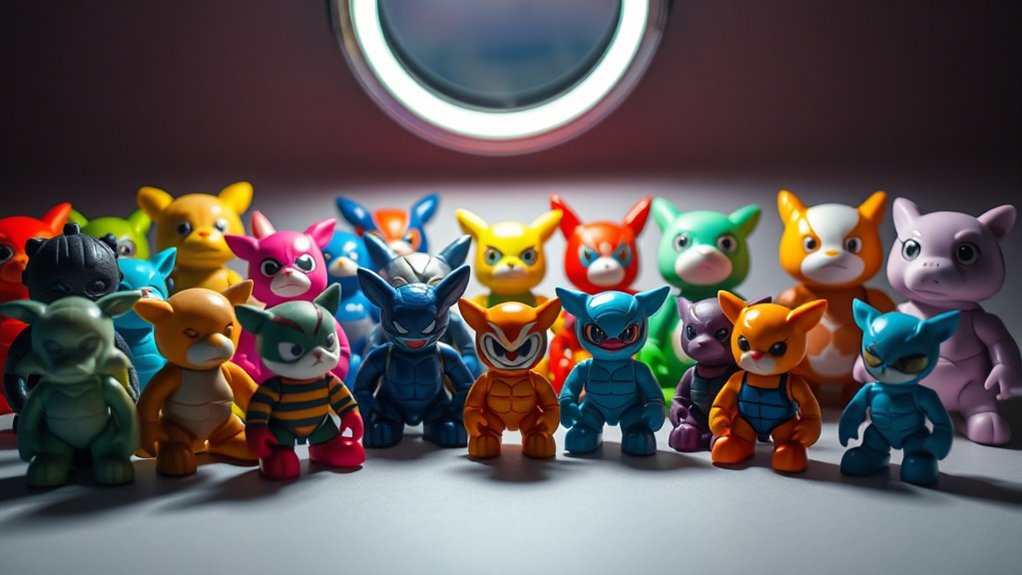
While capturing the perfect shot, the composition of toy photography plays a pivotal role, and ring lights greatly enhance this aspect. They provide consistent lighting, eliminating harsh shadows and highlighting details. You can easily control the direction of the light, allowing you to focus on the toy’s key features, creating a balanced and visually appealing image. Ring lights also offer flexibility in framing. You can experiment with different angles and distances, making the subject pop against its background. This versatility allows you to express creativity while maintaining a professional look. Additionally, the circular shape of a ring light adds a unique catchlight in reflective surfaces, giving toys a lifelike appearance. With ring lights, you elevate your toy photography composition effortlessly.
Limitations and Challenges of Ring Lights
Although ring lights offer significant benefits for toy photography, they come with their own set of limitations and challenges. First, you might find that ring lights can create unwanted reflections, particularly on glossy toy surfaces. This can distract from the overall composition and reduce the quality of your shots. Additionally, the circular shape of a ring light can sometimes result in uneven lighting, especially when trying to illuminate larger dioramas or scenes. You may need additional lighting to achieve the desired effect. Finally, portability can be an issue. Ring lights are often bulky and require a stable power source, making outdoor or on-location shoots more complicated.
- Unwanted reflections: Glossy surfaces can catch distracting light patterns.
- Uneven lighting: Circular lights might not cover large scenes well.
- Portability issues: Bulky design limits mobility and requires power.
Alternative Lighting Options for Toy Photography
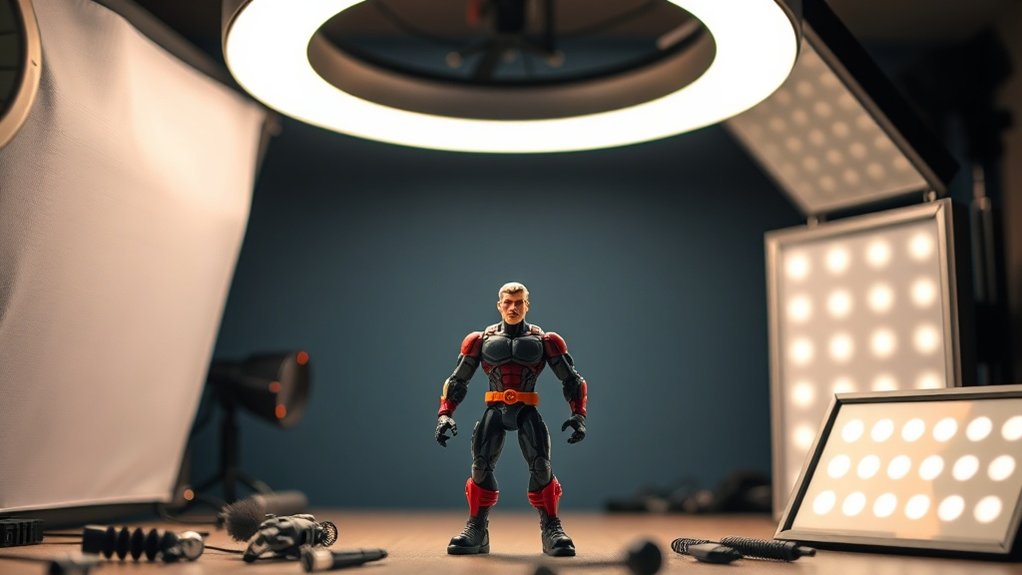
When exploring alternative lighting options for toy photography, you’ll find several innovative solutions that address the limitations of ring lights. Softboxes are a popular choice, providing even, diffused light that minimizes harsh shadows. They’re great for creating a natural look. Consider using LED panels, which offer adjustable brightness and color temperatures, letting you tailor the light to your scene. For more creative control, try using reflectors to bounce natural light, adding depth and dimension to your photos. If you’re looking for portability, portable light wands can be a game-changer, allowing you to light your subjects from different angles. Each option has its unique advantages, so experiment to see which best suits your style and the mood you want to convey.
Frequently Asked Questions
What Is the Ideal Size of a Ring Light for Toy Photography?
You should choose a ring light that’s 10-14 inches for toy photography. It provides even lighting without overwhelming your setup. This size balances portability and effectiveness, ensuring your toys are well-lit and details are captured beautifully.
How Does a Ring Light Affect the Colors in Toy Photography?
When you use a ring light, it enhances the colors in your toy photography by providing even, diffused lighting. It reduces shadows and highlights details, ensuring vibrant hues and accurate representation of your subjects’ colors.
Can Ring Lights Be Used With Smartphone Cameras for Toy Photography?
You can definitely use ring lights with smartphone cameras for toy photography. They provide even lighting, reducing harsh shadows. Just position the ring light correctly around your phone’s lens to achieve the best results for well-lit, detailed shots.
Are There Specific Ring Lights Recommended for Beginners in Toy Photography?
You’ll find several beginner-friendly ring lights perfect for toy photography. Look for adjustable brightness and color temperature options. Brands like Neewer and UBeesize offer reliable choices that won’t break the bank, enhancing your photography skills effectively.
How Do I Choose the Right Intensity of Ring Light for My Toy Photos?
Choosing the right ring light intensity is like finding the perfect seasoning; too much, and it overwhelms. Start with adjustable settings, test different levels, and trust your eyes to find the balance that highlights your toy’s details.
At a Glance
Imagine you’re a painter, and your brush is the ring light. It sweeps evenly over your canvas, illuminating every detail of your toy photography with precision. Yet, like any tool, it has its limits—sometimes casting shadows where you least expect. Embrace these challenges, for they teach you to adapt and grow. But remember, other brushes exist. Explore them, and you’ll find that diverse lighting techniques enrich your art, much like varied strokes enliven a masterpiece.